DR ANTHONY MELVIN CRASTO,WorldDrugTracker, helping millions, A 90 % paralysed man in action for you, I am suffering from transverse mylitis and bound to a wheel chair,With death on the horizon, This will not stop me, Gods call only..........
DR ANTHONY MELVIN CRASTO Ph.D ( ICT, Mumbai) , INDIA 29Yrs Exp. in the feld of Organic Chemistry,Working for GLENMARK PHARMA at Navi Mumbai, INDIA. Serving chemists around the world. Helping them with websites on Chemistry.Million hits on google, world acclamation from industry, academia, drug authorities for websites, blogs and educational contributio
n

Tuesday, 22 September 2015

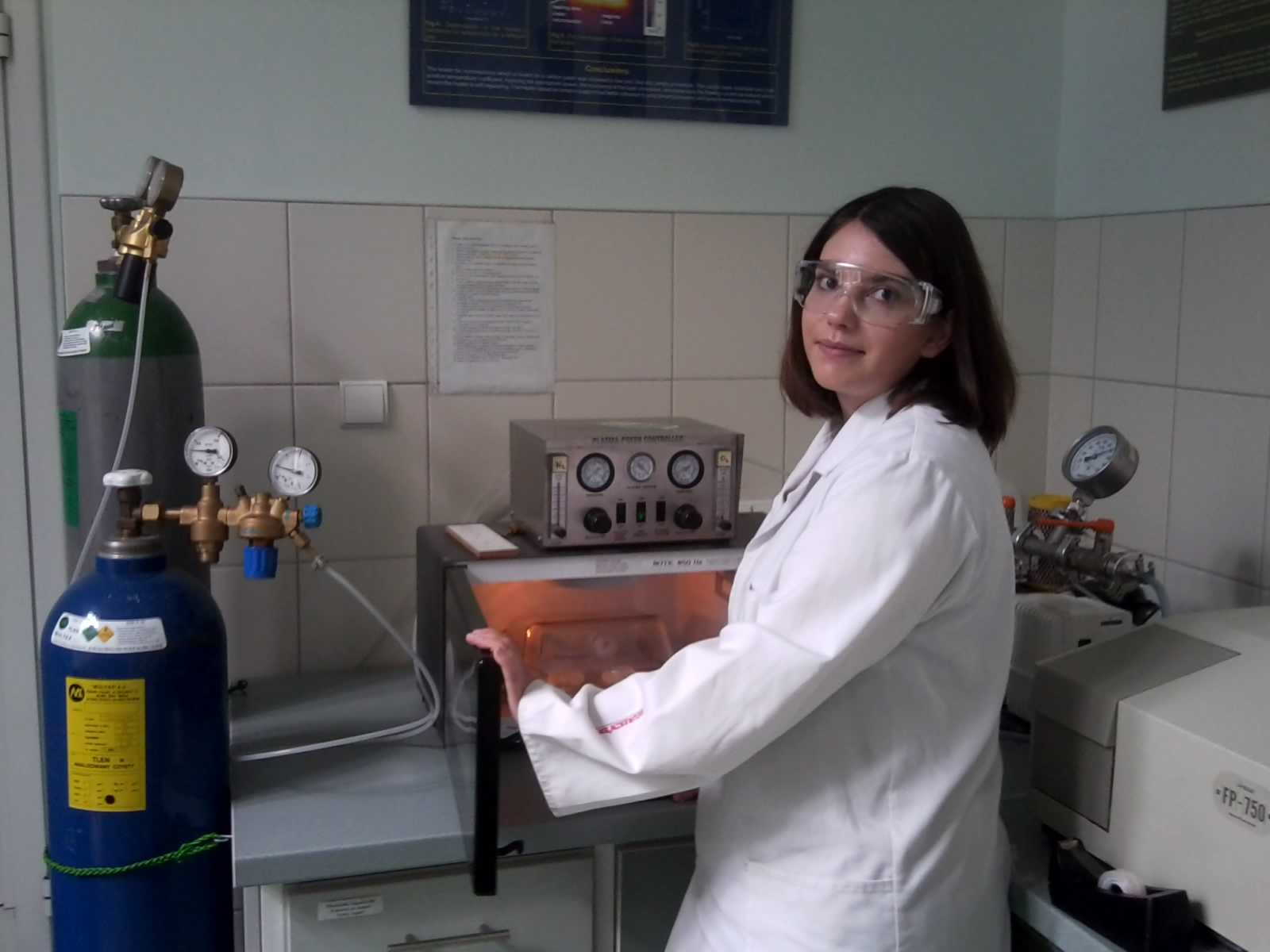
Katarzyna Tokarska


Katarzyna Tokarska

Supervisor: Prof. Michal Chudy
Selected papers
e-mail:ktokarska@ch.pw.edu.pl
CHEMICAL SENSORS RESEARCH GROUP
Research topic: nanotechnology for anticancer therapy
Warsaw University of Technology
Department of Microbioanalytics
Noakowskiego 3
00-664 Warsaw, Poland

mail: brzozka@ch.pw.edu.pl
phone: +48 22 234 5427
fax: +48 22 234 5631
www: csrg.ch.pw.edu.pl
https://www.researchgate.net/profile/Katarzyna_Tokarska


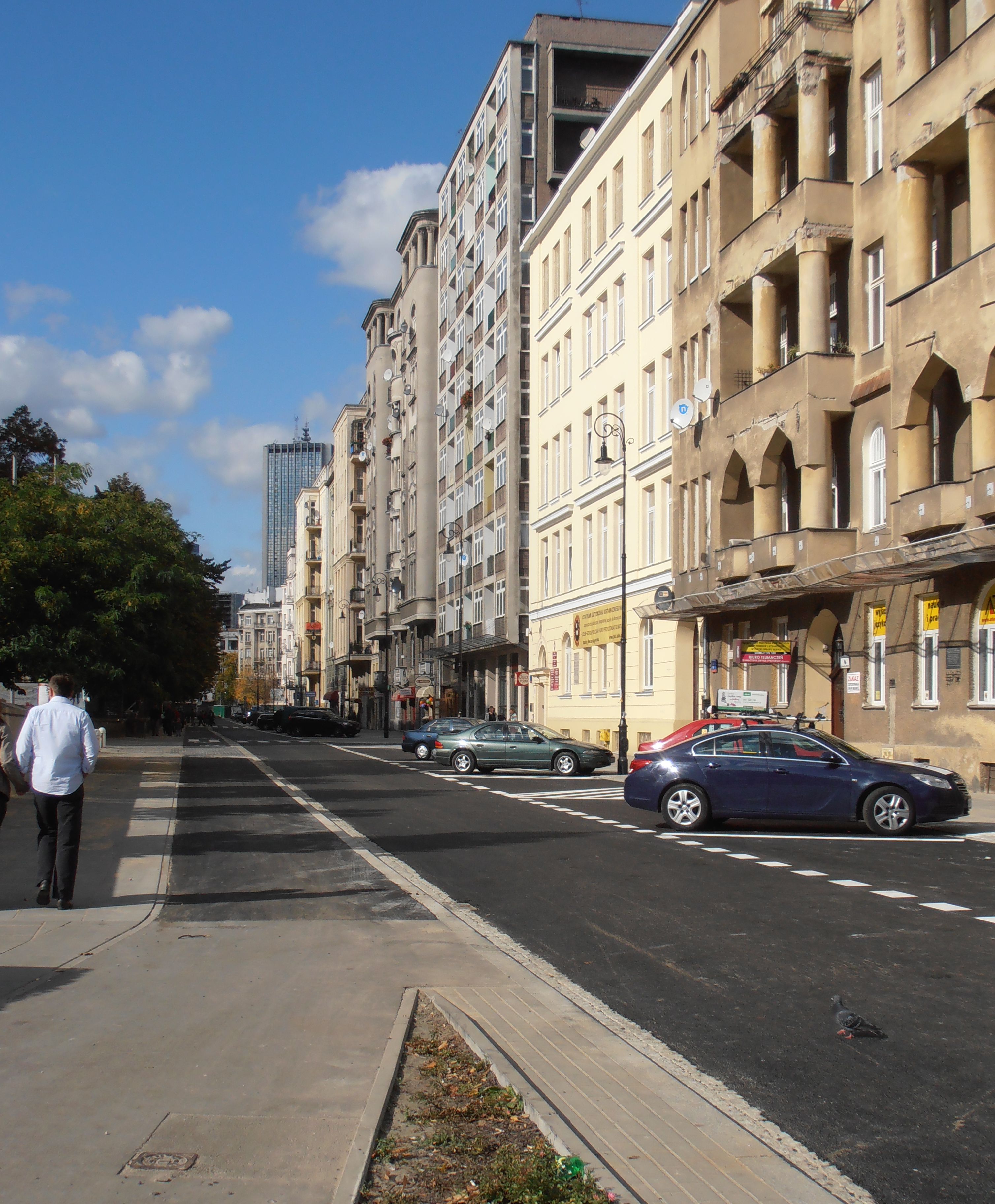
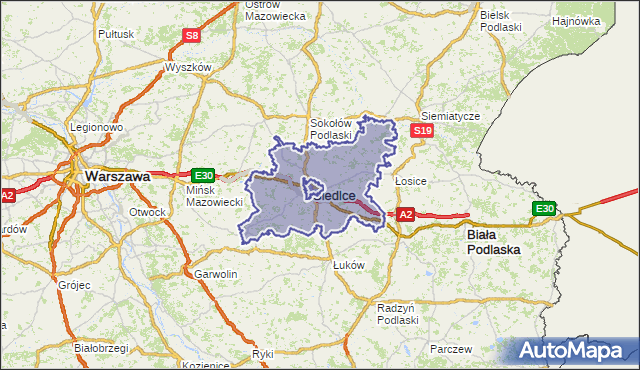
Map of Stanisława Noakowskiego, Warszawa, Poland


////

Faiza Al-Kharafi


Professor Faiza M. Al-KharafiDepartment of Chemistry
Kuwait University
State of Kuwait
Tel: 00965- 4811188 Ext. 7453
Email : chesc@kuc01.kuniv.edu.kw


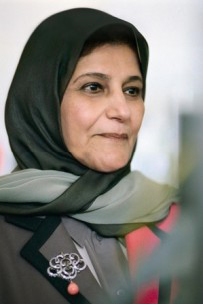
Faiza Al-Kharafi (Arabicفايزة الخرافي‎ Fāyzah al-Kharāfī; born 1946) is a Kuwaiti chemist and academic. She was the president ofKuwait University from 1993 to 2002 and was the first woman to head a major university in the Middle East.[1] She is the vice president of the World Academy of Sciences.
Faiza Mohammed Al-Kharafi
Born1946 (age 68–69)
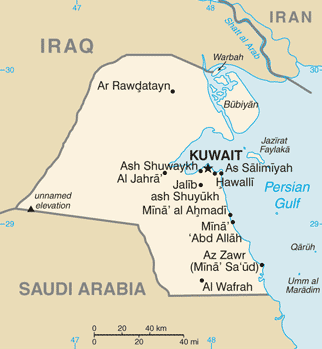
Kuwait
FieldsElectrochemistrycorrosion engineering
Alma materAin Shams University
Kuwait University
Early life and education
Faiza Al-Kharafi was born to a wealthy family in Kuwait in 1946. She attended Al Merkab High School. She received her BSc from Ain Shams University in Cairo in 1967. She then attended Kuwait University where she founded the Corrosion and Electrochemistry Research Laboratory. She received her master's in 1972 and her PhD in 1975.[2]

Career

Al-Kharafi worked in Kuwait University's Department of Chemistry from 1975 to 1981. In 1984 she became chair of the department and served as Dean of the Faculty of Science from 1986 to 1989.[2] She became a professor of chemistry at Kuwait University in 1987.[3] On 5 July 1993, Emir Jaber Al-Ahmad Al-Jaber Al-Sabah issued a decree appointing Al-Kharafi as rector of the University,[4] and she became the first woman to head a major university in the Middle East.[1] She served as president from 1993 to 2002 where she oversaw a staff of 1,500.
Al-Kharafi has studied the impact of corrosion on engine cooling systems, distillation units for crude oil, and high temperature geothermal brines. As an electrochemist, she has studied the electrochemical behavior of aluminum, copper, platinum, niobium, vanadium, cadmium, brass, cobalt, and low carbon steel.[5] She collaborated on the discovery of a class of molybdenum-based catalysts that improve gasoline octane without benzene by-products.[6]
She joined the Board of the United Nations University in 1998.[7] Following the passage of women's suffrage in Kuwait in 2005, she said "[w]hen we have political rights, we can express our opinion and vote for the correct person... This gives us the chance to express our ideas."[1] In 2006, she helped to found the American Bilingual School in Kuwait. She is the vice president of The World Academy of Sciences. She is a board member of the Kuwait Foundation for the Advancement Sciences.

Works

Awards and honours

Forbes magazine named her as one of "The 100 Most Powerful Women – Women To Watch In The Middle East" in 2005.[1] She received the Kuwait Prize in Applied Sciences in 2006. The Council for Gulf Relations named her Top Gulf Woman of the Year in 2008.[8] In 2011 she was the recipient of the L'Oréal-UNESCO Award for Women in Science for her work on corrosion.[9]

Personal life

Al-Kharafi is married to Ali Mohammed Thanian Al-Ghanim and has five sons and ten grandchildren. Of her sons, Marzouq Al-Ghanim is the current speaker of Kuwait National Assembly. She spends her Summers at Lake Geneva, Switzerland. Her brothers are Jassem Al-Kharafi, former speaker of the Kuwaiti National Assembly, and the late Nasser Al-Kharafi. She shares in the family fortune from M. A. Kharafi & Sons.[2][8]

References

  1. Jump up to:a b c d "Middle Eastern Women To Watch". Forbes. 26 July 2005.
  2. Jump up to:a b c "Fayza Al Khorafi". Who's Who Amongst Arab Women. Retrieved 20 June 2013.
  3. Jump up^ O'Shea, Maria (1999). Kuwait (2nd ed.). New York: Marshall Cavendish Corp. p. 61. ISBN 978-0-7614-0871-0.
  4. Jump up^ "This day of Kuwait's history". Kuwait News Agency. 5 July 2009.
  5. Jump up^ "Faiza al-Kharafi". Kuwait–MIT Center. Retrieved 20 June 2013.
  6. Jump up^ "Faiza Al-Kharafi (Αφρική και Αραβικές Χώρες)"Eleftherotypia. 3 March 2011.
  7. Jump up^ "This day in Kuwait's history". Kuwait News Agency. 1 March 2008.
  8. Jump up to:a b Farag, Talaat I. (July 2008). "Dr. Faiza Al-Khorafi, PhD"The Ambassadors Online Magazine.
  9. "Outstanding women scientists to receive 2011 L’ORÉAL-UNESCO Awards (3 March) and Fellowships (2 March)". UNESCO. 25 February 2011.

Further reading

External links


/////

Ram Awatar Maurya


Org. Chem. Front., 2015, 2,1308-1312
DOI: 10.1039/C5QO00207A, Research Article
D. Chandrasekhar, Satheesh Borra, Jeevak Sopanrao Kapure, Ghule Shailendra Shivaji, Gannoju Srinivasulu, Ram Awatar Maurya
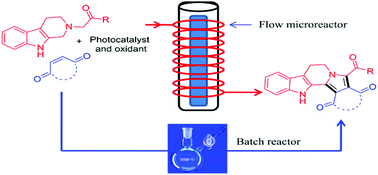
Fused [small beta]-carbolines were synthesized via a visible light photoredox catalyzed oxidation/[3 + 2] cycloaddition/oxidative aromatization reaction cascade in batch and flow microreactors.
Fused β-carbolines were synthesized via a visible light photoredox catalyzed oxidation/[3 + 2] cycloaddition/oxidative aromatization reaction cascade in batch and flow microreactors.
Several structurally diverse heterocyclic scaffolds were obtained in good yields by coupling of tetrahydro-β-carbolines with a variety of dipolarophiles under photoredox multiple C–C bond forming events.
The photoredox coupling of tetrahydro-β-carboline with 1,4-benzoquinone was significantly faster in continuous flow microreactors and the desired products were obtained in higher yields compared to batch reactors.
Synthetic procedures General experimental procedures for the synthesis of N-alkylated of tetrahydro-β-carbolines 1a-f: In a 25 mL round bottom flask, tryptoline (86 mg, 0.5 mmol), α-halo carbonyls (0.5 mmol), Et3N (50 mg, 0.5 mmol) and CH2Cl2 (5 mL) was taken and the reaction mixture was stirred at ambient temperature for 2 h. Next the reaction mixture was diluted with CH2Cl2 (15 mL) and washed with water. The organic layer was dried over anhydrous Na2SO4 and evaporated to yield a crude product which was purified by silica-gel column chromatography using ethyl acetate/hexane in increasing polarity to yield compounds 1a-f.
General experimental procedures for the visible light photoredox catalyzed coupling of Nalkylated of tetrahydro-β-carbolines 1a-f with dipolarophiles 2a-g under batch conditions: In a 25 mL round bottom flask, tetrahydro-β-carbolines 1a-f (0.1 mmol), dipolarophiles 2a-g (0.1 mmol), [Ru(bpy)3Cl2]·6H2O (0.5 mol%) and MeCN (5 mL) was taken. The reaction vessel was kept at a distance of 10 cm (approx.) from a visible light source (11W white LED bulb) and the reaction mixture was stirred in open air condition until the reaction was complete (TLC). Next the reaction mixture was concentrated to give a crude product which was purified Electronic Supplementary Material (ESI) for Organic Chemistry Frontiers. This journal is © the Partner Organisations 2015 by silica-gel column chromatography using ethyl acetate/hexane in increasing polarity to yield compounds 3a-n
General experimental procedures for the visible light photoredox catalyzed coupling of Nalkylated of tetrahydro-β-carbolines 1a with dipolarophiles 2a in flow microreactors: A solution of tetrahydro-β-carboline 1a (0.2 mmol) and dipolarophile 2a (0.2 mmol) in MeCN (5 mL) was kept in one syringe and the solutions of photocatalyst [Ru(bpy)3Cl2]·6H2O (0.001 mmol in 5 mL MeCN) and t-BuOOH (2 mmol in 2 mL MeCN) were taken in two separate syringes. All the three solutions were pumped via two syringe pumps and mixed on an Xjunction and flown through the capillary microreactor wrapped over a visible light source (11W white LED bulb). Under stable conditions, exactly 6 mL of the reaction mixture was collected, concentrated to yield a crude product which was purified by silica-gel column chromatography using ethyl acetate/hexane in increasing polarity to yield compounds 3a


*Corresponding authors
aDivision of Medicinal Chemistry and Pharmacology, CSIR-Indian Institute of Chemical Technology, Hyderabad-500007, India
E-mail: ramaurya@iict.res.in
bNational Institute of Pharmaceutical Education and Research, Balanagar, Hyderabad-500035, India
cAcademy of Scientific and Innovative Research, New Delhi 110025, India
Org. Chem. Front., 2015,2, 1308-1312
DOI: 10.1039/C5QO00207A

RESEARCH EXPERIENCE

 Mar 2012–Jun 2012, PostDoc Position
  • Pohang University of Science and Technology · Department of Chemical Engineering · Prof Dong Pyo Kim
    South Korea · Andong
  • Sep 2009–Feb 2012, Post Doctoral Fellow
    Chungnam National University
    South Korea · Daejeon

 
///////