One Organic Chemist One Day............Honouring Profiles of leading Organic Chemists brought to you by DR ANTHONY MELVIN CRASTO, worlddrugtracker, helping millions, amcrasto@gmail.com, +91 9323115463, India, skype amcrasto64
DR ANTHONY MELVIN CRASTO Ph.D ( ICT, Mumbai) , INDIA 29Yrs Exp. in the feld of Organic Chemistry,Working for GLENMARK PHARMA at Navi Mumbai, INDIA. Serving chemists around the world. Helping them with websites on Chemistry.Million hits on google, world acclamation from industry, academia, drug authorities for websites, blogs and educational contribution
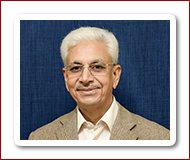
Dr. Saeed Ahmad Nagra is professor in
Department of Food Science and Human Nutrition UVAS Lahore. He
holdsgegrees of B.Sc M.Sc in chemistry and he did his Ph.D in
Nutrition from University of Agriculture Faisalabad. He has been working
as Professor of Biochemistry, Institute of Chemistry,
University of the Punjab, Lahore from August 2001to 2014. Where he
remained Director, Institute of Chemistry, 2008-2011. Besides this he
was Member Senate University of the Punjab, Member Academic Council,
University of the Punjab. Deputy Advisor (Students), University of the
Punjab, Warden, International Hall, University of the Punjab.
Secretary, Punjab University Academic and Co-Curricular Committee
(PUACC), Chairman Hall Council, University of the Punjab and Secretary,
Journal of Scientific Research, University of the Punjab,2005-2011
Trace Minerals. In: Text Book on
Food & Nutrition (Urdu) for B.Sc. Course, Allama Iqbal Open
University, Islamabad, 1988.
Urdu translation of “Medicinal
Plants”. Urdu Science Board Lahore (Government of Pakistan), 1990.
Editor, Text Book of Chemistry for Class IX. Punjab Text Book Board, Lahore, 2002.
Biosynthesis of calcium gluconate by Aspergillus niger in shake flask. Chapter In: Modern Multidisciplinary Applied microbiology. Editor: Antonio Mendez-Vilas.
ForschungsDozent, Technische Universität München, Germany, 2002 - 2009
Postdoctoral Fellow, The Scripps Research Institute, Germany, 1999 - 2002
Dr. rer. nat, Technische Universität München, Germany, 1999
Dipl.-Chem., Technische Universität München, Germany, 1996
Research Interests
While commonly nature is considered a source of
inspiration for chemists, organometallic and coordination chemistry
provide a divers set of functions, which can be used to probe, augment
and improve nature. Prof. Eppinger's research group combines homogeneous
catalysis and synthetic biology to establish new catalysts for novel
chemistry. Introducing tools and concepts of synthetic chemistry into
living cells opens an unexplored research area, which integrates
molecular catalysis' versatility and biocatalytic selectivity. Tailoring
the interactions of molecular catalysts with biological ligands results
in novel selectivities and reactivities. The four currently active
research projects connect the interface of organometallic chemistry,
molecular/microbiology and catalysis:
development of organometallic catalyst motifs,
which are stable and active under physiological conditions. The design
of catalysts motifs, which exhibit high activity at room temperature in
water targets Green Chemistry applications and is a prerequisite for
the synthesis of artificial metalloenzymes.
development tailored artificial metal centers in host-proteins.
Integrating the specific advantages of organometallic catalysis and
enzymes, these systems target in selective hydrogenations,
cycloadditions, (amino)hydroxylations, C-H activation and cross–coupling
reactions.
Discovery of novel organometallic mechanism in enzyme catalysis.
This project targets to identify and characterize novel metalloproteins
and to improve the knowledge about how a protein framework augments
properties of metal centers. Characterization of iron sulfur cluster
enzymes with organometallic intermediates and extremophilic Red Sea
metalloenzymes are a current focus.
in vivo applications of metalloproteins and metal complexes.
In an industry sponsored project we investigate artificial
photosynthesis based on the combination of electrocatalytic CO2
reduction and microbial metabolism. Through collaborations, we have also
reactivated biomedical projects and are currently exploring in vivo
applications of the plethora of metal complexes available in our group.
This includes cytotoxicity studies as well as the design of
chemiluminescent metal complexes for cancer diagnostic.
Research Experience
Aug 2009–present
Biological and Organometallic Catalysis Laboratory
King Abdullah University of Science and Technology · KAUST Catalysis Center, KCC
Saudi Arabia · Jeddah
Jul 2002–Aug 2009
ForschungsDozent
Technische Universität München · Faculty of Chemistry
IspG
protein serves as the penultimate enzyme of the recently discovered
non-mevalonate pathway for the biosynthesis of the universal isoprenoid
precursors, isopentenyl diphosphate and dimethylallyl diphosphate. The
enzyme catalyzes the reductive ring opening of 2C-methyl-d-erythritol
2,4-cyclodiphosphate, which affords 1-hydroxy-2-methyl-2-(E)-butenyl
4-diphosphate. The protein was crystallized...more
The
reaction of (S)-2,5-dihydrophenylalanine 1 with ruthenium(III) chloride
yields the μ-chloro-bridged dimeric η6-phenylalanine ethyl ester
complex 3, which can be converted into the monomeric analogue,
η6:κ1-phenylalanine ethyl ester complex 12, under basic conditions.
Studies were carried out to determine the stability and reactivity of
complexes bearing η6- and η6:κ1-chelating phenylalanine...more
An efficient protocol for copper-free palladium-catalyzed Sonogashira cross-coupling in aqueous media at low temperatures
Tetrahedron Letters (Elsevier)
November 30, 2011
A
thorough study on copper-free Sonogashira cross-couplings in water was
carried out using the palladacycle,
[{Pd(μ-Cl){κ2-P,C-P(iPr)2(OC6H3-2-Ph)}}2] as pre-catalyst with different
bases and palladium concentrations. The highly active pre-catalyst
imparts good to near quantitative yields using a concentration of 0.25
mol % at 40 °C. This broadly applicable protocol exhibits high tolerance
of...more
Side chain functionalized η5-tetramethyl cyclopentadienyl complexes of Rh and Ir with a pendant primary amine group
Journal of Organometallic Chemistry (Elsevier)
May 15, 2009
Dimeric
Rh(III) and Ir(III) Cp* complexes with pendant primary amine tether
were synthesized from a Cp*–NH2 tautomer and the respective metal(III)
chlorides. The electrophilic metal center and the nucleophilic side
chain functionality may be addressed separately under the appropriate
reaction conditions.
Side chain functionalized η5-tetramethyl cyclopentadienyl complexes of Rh and Ir with a pendant primary amine group
Journal of Organometallic Chemistry (Elsevier)
May 15, 2009
Dimeric
Rh(III) and Ir(III) Cp* complexes with pendant primary amine tether
were synthesized from a Cp*–NH2 tautomer and the respective metal(III)
chlorides. The electrophilic metal center and the nucleophilic side
chain functionality may be addressed separately under the appropriate
reaction conditions.
An efficient protocol for copper-free palladium-catalyzed Sonogashira cross-coupling in aqueous media at low temperatures
Tetrahedron Letters (Elsevier)
November 30, 2011
A
thorough study on copper-free Sonogashira cross-couplings in water was
carried out using the palladacycle,
[{Pd(μ-Cl){κ2-P,C-P(iPr)2(OC6H3-2-Ph)}}2] as pre-catalyst with different
bases and palladium concentrations. The highly active pre-catalyst
imparts good to near quantitative yields using a concentration of 0.25
mol % at 40 °C. This broadly applicable protocol exhibits high tolerance
of...more
The
reaction of (S)-2,5-dihydrophenylalanine 1 with ruthenium(III) chloride
yields the μ-chloro-bridged dimeric η6-phenylalanine ethyl ester
complex 3, which can be converted into the monomeric analogue,
η6:κ1-phenylalanine ethyl ester complex 12, under basic conditions.
Studies were carried out to determine the stability and reactivity of
complexes bearing η6- and η6:κ1-chelating phenylalanine...more
IspG
protein serves as the penultimate enzyme of the recently discovered
non-mevalonate pathway for the biosynthesis of the universal isoprenoid
precursors, isopentenyl diphosphate and dimethylallyl diphosphate. The
enzyme catalyzes the reductive ring opening of 2C-methyl-d-erythritol
2,4-cyclodiphosphate, which affords 1-hydroxy-2-methyl-2-(E)-butenyl
4-diphosphate. The protein was crystallized...more




 .
.

 .
.