DR ANTHONY MELVIN CRASTO,WorldDrugTracker, helping millions, A 90 % paralysed man in action for you, I am suffering from transverse mylitis and bound to a wheel chair,With death on the horizon, This will not stop me, Gods call only..........
DR ANTHONY MELVIN CRASTO Ph.D ( ICT, Mumbai) , INDIA 29Yrs Exp. in the feld of Organic Chemistry,Working for GLENMARK PHARMA at Navi Mumbai, INDIA. Serving chemists around the world. Helping them with websites on Chemistry.Million hits on google, world acclamation from industry, academia, drug authorities for websites, blogs and educational contributio
n

Monday, 9 May 2016

Monica Kosa

Monica Kosa.


links

Summary

Energy Storage and Generation Materials - Computational Scientist

Experience

Computational Chemistry Researcher

Technion
 – Present (6 months)

Senior Researcher

Bar-Ilan University
 –  (1 year 2 months)
Li-ion and Mg-ion Batteries components.
Non Precious Metal Catalysts, fuel cells.
Photovoltaic devices
Elelctro-catalysis

Post doctoral research fellow

Bar Ilan University
 –  (2 years 11 months)Ramat Gan, Israel
Modelling alternative energy devices: batteries and solar cells.

Post doctoral research fellow

ETH Zurich
 –  (3 years)
DFT characterization of hybrid framework materials.

PhD

Technion - Israel Institute of Technology
 –  (6 years)Haifa, Israel
Computational studies of low-valent silicon compounds.

Publications

Chiral, Racemic and Meso- Lithium Tartrate Framework Polymorphs: A Detailed Structural Analysis(Link)

Crystal Growth & Design, ACS Publications
 

Honors & Awards

Technion President's list (university top 5-7%)
Technion Dean's list (faculty top 10%)

Volunteer Experience & Causes

Teaching Science in High School

The Trump Foundation, "Schiur be-yahad" Section
 – Present (1 year 8 months)Education

Ph.D Thesis
Ph.D StudentMonica Kosa
SubjectTheoretical Studies of Silicon and Metallasilicon
Compounds
DepartmentDepartment of Chemistry
SupervisorFull Professors Apeloig Yitzhak
Full Thesis text 
Abstract
Theoretical investigations have played a very important role in the study of low-coordination silicon compounds and much of the fundamental knowledge on this class of compounds comes from quantum mechanical calculations. Yet, relatively little is known about their physical and chemical properties, especially the mechanisms which control their chemical reactions and many fundamental issues, such as structure-reactivity relationship.
The research topics studied in the thesis are:
(1) Trisilaallene and the relative stability of Si3H4 isomers.
Published in the Journal of Chemical Theory and Computation20062, 956.
In this study, the unique highly bent structure of the yet unknown trisilaallene, H2Si=Si=SiH2, as well as its electronic properties were elucidated. The theoretical prediction was verified recently experimentally by a research group in Japan. 16 minima were located on the Si3H4 potential energy surface.
 (2) How to design linear allenic-type trisilaallenes and trigermaallenes.
Published in the Journal of the American Chemical Society, 2004126, 10544.
In this study we provide a theoretical prescription on how to design a linear trisilaallene and trigermaallene. We analyze the electronic and steric factors that control the geometry of trisilaallene, and predict that (R2B)2Si=Si=Si(BR2)2 should have a linear structure similar to that of H2C=C=CH2.
 (3) A theoretical study of ladder polysilanes.
Accepted for publication in Organometallics.
This study rationalizes and provides physical insight into the results of previous experimental studies on ladder polysilanes, which are promising candidates for electronic devices.
(4) Cope rearrangement of 1,5-hexasilahexadiene
Paper in preparation
In this study we investigate the silicon analogue of one of the most studied reactions in organic chemistry - the Cope rearrangement. It reveals unprecedented mechanistic scenario, both in organic and in organosilicon chemistry, where a biradical intermediate is significantly more stable thermodynamically than the starting 1,5-hexasilahexadiene.
 (5) Does the reactivity of silylene indicate its electronic ground state?
Paper in preparation.
We investigate the mechanisms of C-H bond insertion and of 1,4-addition to butadiene of singlet and triplet silylenes. It was believed that insertion of silylenes into a C-H bond occurs preferentially by triplet silylenes, so that if such reaction is observed it provides evidence for their existence. Our study, using DFT and ab initio methods shows that for both reactions the reactivity of singlet silylenes is much greater than that the corresponding triplet silylenes. This reopens the question regarding the existence of triplet state silylenes, and how to prove this experimentally.
//////

Prof. Ayelet Fishman


Prof. Ayelet Fishman

Room:  4-412
Tel: 972-4-8295898
E-mail: afishman@tx.technion.ac.il
Short CV
http://afish.technion.ac.il/

Biocatalysis, the use of microbial cells or isolated enzymes in the production of fine chemicals, can lead to cleaner and more sustainable industrial processes. Enzymes are attractive catalysts for chemical synthesis due to their exceptional enantio- and regioselectivities; hence, enzymes can be used in both simple and complex syntheses without the need for the blocking and deblocking steps often found in organic processes. Directed evolution is a novel approach based on the Darwinian algorithm of mutation and selection, which allows investigating and improving enzyme functions. Our lab is involved in utilizing enzymes, mainly oxygenases and lipases, as well as yeast cells, for production of fine chemicals. Our focus is on chiral molecules and food nutraceuticals. We use protein engineering techniques to render the enzymes more suitable for their new and improved catalytic roles. Our main interest is in learning to control enzyme specificity.  We are specifically working on the following topics:
  • Applied biocatalysis
  • Directed evolution of enzymes
  • Enzymes in non-conventional media
  • Structure-function relationships in enzymes

"I can for see a time in which physiological chemistry will not only make greater use of natural enzymes but will actually resort to creating synthetic ones".
Emil Fischer, Nobel Lecture, 1902.


Research Fields:
Applied and molecular biocatalysis, exploitation of enzymes and whole cell systems for synthesis of drugs and nutraceuticals, directed evolution of enzymes, immobilized enzymes, enzymes in organic solvents.

Ayelet Fishman
Associate Professor                                                      Department of Biotechnology & Food Engineering
Technion-Israel Institute of Technology
Haifa, Israel
Tel: 972-4-8295898
Fax: 972-4-8293399
afishman@tx.technion.ac.il
 
ABOUT
Ph.D.2002, Technion, Biotechnology
M.Sc.1992, Technion, Biotechnology
B.Sc.1989, Technion, Biotechnology and Food Eng.2007-2011 - The Technion award for excellence in teaching.
2008 - The Alfred & Yehuda Wiessman award for excellence in teaching.
2011 - The Henri Gutwirth Prize for the Promotion of Research.
2011 - The Moshe Yanai prize for excellence in teaching.
RESEARCH AREA IN ENERGY
Biotechnology based production of biodiesel.
RESEARCH INTERESTS
Biomass-Based Fuels; Conversion of oils to biodiesel using enzymes. Engineering enzymes for improved activity in non-aqueous media. Structure-functions studies of enzymes.
SELECTED PUBLICATIONS
1. Sendovski, M., Kanteev, R., Shuster Ben-Yosef, V., Adir, N., and Fishman, A. (2011) First structures of Bacillus megaterium tyrosinase reveal plasticity in copper binding. J. Mol. Biol. 405:227-237.
2. Achmon, Y., Goldshtein, J., Margel, S., and Fishman, A. (2011) In situ removal of 2-phenylethanol from yeast fermentation using hydrophobic microspheres. J. Microencapsulation. 28:628-638.
3. Brouk M., and Fishman, A. (2012) Improving process conditions for hydroxytyrosol synthesis by toluene 4-monooxygenase. J. Mol. Catal. B:Enzymatic 84:121-127.
4. Dror, A., and Fishman, A. (2012) Engineering non-heme mono- and dioxygenases for biocatalysis. Comput. Structur. Biotechnol. J. 2 (3): e201209011. doi: http://dx.doi.org/10.5936/csbj.201209011.
5. Goldfeder, M., Egozi, M., Shuster Ben-Yosef, V., Adir, N. and Fishman, A. (2013) Changes in tyrosinase specificity by ionic liquids and SDS. Appl. Microbiol. Biotechnol. 97:1953-1961.
6. Goldfeder, M., Kanteev, M., Adir, N. and Fishman, A. (2013) Influencing the monophenolase/diphenolase activity ratio in tyrosinase. BBA-Proteins and Proteomics. 1834:629-633.
7. Shainsky, J., Bernath-Levin, K., Isaschar-Ovdat, S., Glaser, F., and Fishman, A. (2013) Protein engineering of nitrobenzene dioxygenase for enantioselective synthesis of chiral sulfoxides. Prot. Eng. Des. Select. 26:335-345. (Chosen for the cover of the issue).
8. Kanteev, M., Goldfeder, M., Chojnacki, M., Adir, N. and Fishman, A. (2013) The mechanism of copper uptake by tyrosinase from Bacillus megaterium. J. Biol. Inorg. Chem. 18:895-903.
9. Achmon, Y., Ben-Barak Zelas, Z. and Fishman, A. (2014) Cloning Rosa hybrid phenylacetaldehyde synthase for the production of 2-phenylethanol in a whole cell Escherichia coli system. Appl. Microbiol. Biotechnol. 98:3603-3611.
10. Goldfeder, M. and Fishman, A. (2014) Modulating enzyme activity using ionic liquids or surfactants. Appl. Microbiol. Biotechnol. 98:545-554.
11. Dror, A., Shemesh, E., Dayan, N. and Fishman, A. (2014) Engineering lipase from Geobacillus stearothermophilus for improved stability in methanol. Appl. Environ. Microbiol. 80:1515-1527.
12. Bernath-Levin, K., Shainsky, J., Sigawi, L. and Fishman, A. (2014) Directed evolution of nitrobenzene dioxygenase for the production of the antioxidant hydroxytyrosol. Appl. Microbiol. Biotechnol. 98:4975-4985.
13. Hosseini, A., Brouk, M., Lucas, M.F., Glaser, F., Fishman, A.* and Guallar, V.* (2014) An atomic picture of ligand migration in toluene 4-monooxygenase. J. Phys. Chem. B. DOI: 10.1021/jp502509a.
14. Goldfeder, M., Kanteev, M., Isaschar-Ovdat, S., Adir, N.* and Fishman, A.* (2014) Determination of tyrosinase substrate binding modes reveals the mechanistic differences between type-3 copper proteins. Nat. Commun. DOI 10.1038/ncomms5505.
15. Isaschar-Ovdat, S., Rosenberg, M., Lesmes, U. and Fishman, A. (2015) Characterization of oil-in-water emulsions stabilized by tyrosinase-crosslinked soy glycinin. Food Hydrocolloid. 43:493-500.
16. Gefen, E.*, Talal, S., Brendzel O., Dror A. and Fishman A. (2015) Variation in quantity and composition of cuticular hydrocarbons in the scorpion Buthus occitanus (Buthidae) in response to acute exposure to desiccation stress. Comp. Biochem. Physiol., A: Comp. Physiol. Accepted.

ACADEMIC DEGREES

2002Ph.D., Dept. of Biotechnology and Food Engineering, Technion, Haifa, Israel.
1992M.Sc.,  Dept. of Biotechnology and Food Engineering, Technion, Haifa, Israel.
1989B.Sc. (summa cum laude), Dept. of Biotechnology and Food Engineering, Technion, Haifa, Israel.

ACADEMIC APPOINTMENTS

2011Associate Professor, Dept. Biotechnology and Food Engineering, Technion
2005-2011Senior lecturer, Dept. of Biotechnology and Food Engineering, Technion, Haifa, Israel.
2002-2004Post-doctoral fellow with Prof. Thomas K. Wood. Dept. of Chemical Engineering, University of Connecticut, Storrs, USA.
2001-2002Adjunct lecturer, Dept. of Biotechnology and Food Engineering, Technion, Haifa, Israel.

PROFESSIONAL EXPERIENCE

1993-2005Research scientist and project leader, TAMI-IMI Institute for R&D, Member of ICL Ltd., Haifa Bay, Israel. Specializing in the use of enzymes in organic chemistry, enzyme modification and immobilization. Working on synthesis of complex chemical molecules via biocatalysis.

HONORS

2012The Technion award for excellence in teaching - top 4%
2011The Yanai Prize for excellence in teaching
2011The Henri Gutwirth Prize for the Promotion of Research
2011The Technion award for excellence in teaching – top 4%
2010The Technion award for excellence in teaching – top 4%
2009Technion award for excellence in teaching - top 4%
2008Alfred & Yehuda Wiessman award for excellence in teaching
2008Technion award for excellence in teaching - top 4%
2007Technion award for excellence in teaching - top 4%
2005,2006Abraham and Jennie Fialkow Academic Lectureship

COURSES

Food Chemistry064322
Food Analysis064324
Laboratory in Food Analysis064326
Applied Biocatalysis066518

THE PROJECTS:


  • Isolation and Characterization of a Novel Bacterial Tyrosinase , Abstract
  • Directed Evolution and Rational Mutagenesis of Toluene Monooxygenases for Synthesis of Hydroxytyrosol , Abstract
  • Protein Engineering of Toluene Monooxygenases for Synthesis of Chiral Sulfoxides ,Abstract
  • Utilization of Natural Isolates of Saccharomyces cerevisiae Strains for Production of Valuable Chemicals, Abstract
  • Molecular and Process Engineering Approaches for Biotechnological Production of 2-Phenylethanol , Abstract

THE PUBLICATION PAGE


PUBLISHED PAPERS
PATENTS
BOOK CHAPTERS
CONFERENCES


Group
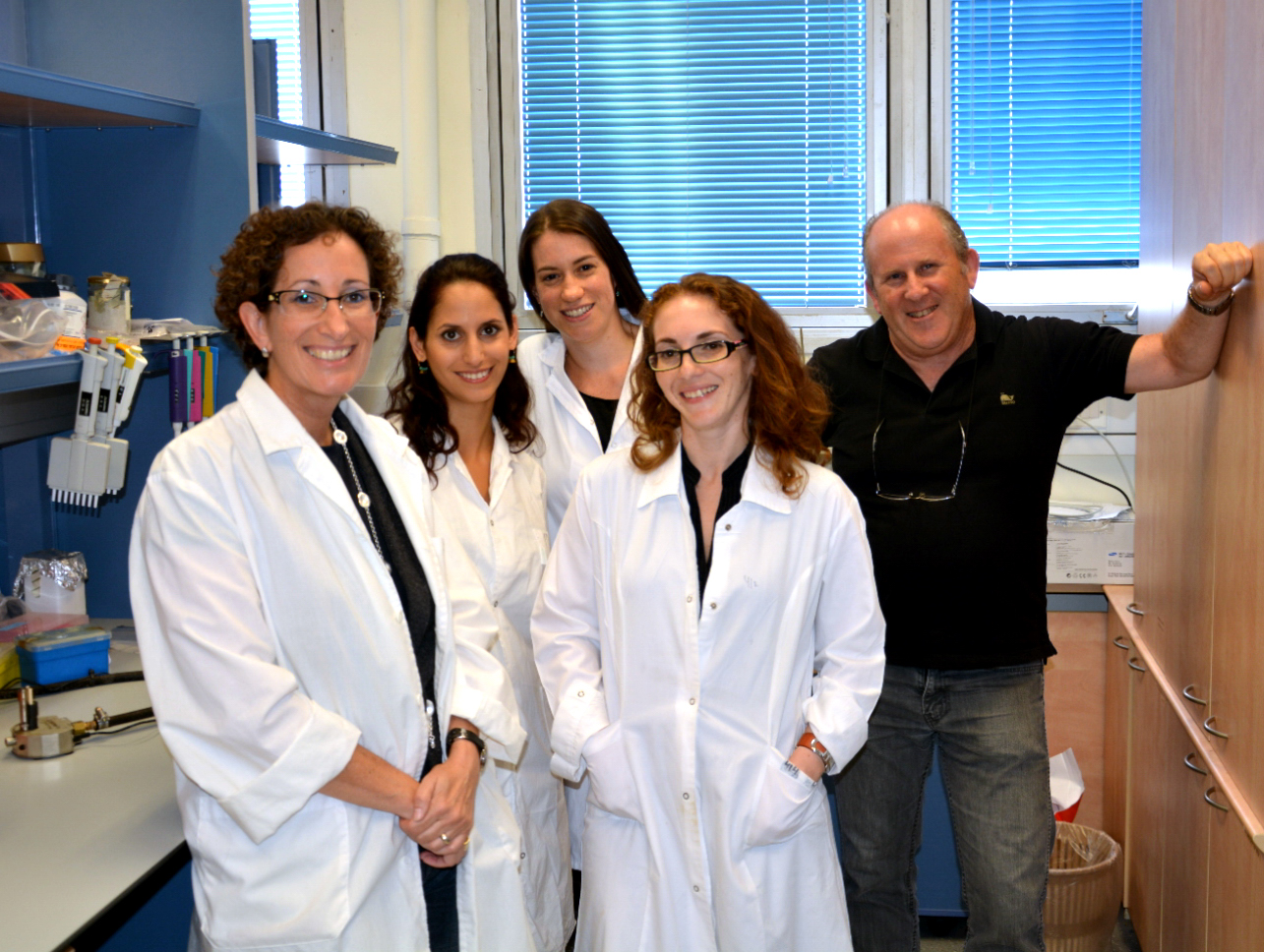
Group picture, summer 2014

The Tyrosinase group (l to r): Ayelet Fishman, Sivan, Mor, Rita and Noam


//////

Sivan Isaschar


Sivan Isaschar-Ovdat

Phone:8293083
Fax:8293399
Email:sivanisas@gmail.com
Sivan completed her BSc studies in the Dept. of Biotechnology and Food Engineering in 2011. In October she joined the Fishman group and is working on utilization of tyrosinase for crosslinking of soy proteins.
https://il.linkedin.com/in/sivan-isaschar-ovdat-8011245b

Experience

PHD Student

Technion - Israel Institute of Technology
– Present (4 years 8 months)Israel
Sivan Isaschar-Ovdat

The Tyrosinase group (l to r): Ayelet Fishman, Sivan, Mor, Rita and Noam


////////

Galia Maayan

.

Galia Maayan
Assistant Professor

Post doc: New York University and University of Florida, USA 2007-2011
Ph.D: Weizmann Institute of Science, 2006

Room Number: 415a
Phone: +972-4-8293947
Fax: +972-4-8295703
gm92@tx.technion.ac.il
+972-4-8293947, +972-4-8293947

links
  • https://www.linkedin.com/in/galia-maayan-b974344

    PhD: Chemistry Faculty, Weizmann Institute of Science, 2006.
    MSc: Chemistry Faculty, Weizmann Institute of Science, 2000.
    BSc: Chemistry, Tel-Aviv University (MAGNA CUM LAUDE), 1998.
    Nano Main Field:
    I am interested in the interactions between biomimetic oligomers and metal nanoparticles towards the generation of chiral nanoparticles and biomimetic nanoparticles assemblies for asymmetric catalysis and sensors materials.
Research Interests
Biomimetic Chemistry, metal nanoparticles, chirality, cooperative catalysis, catalysis, molecular sensors, green chemistry and renewable energy.
Research Abstract

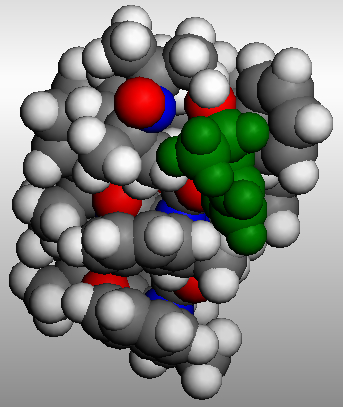
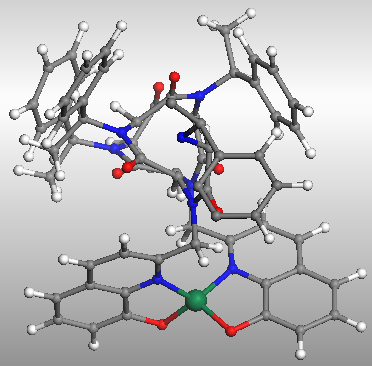
Figure 1: (A) The structure of a polypeptide and a peptoid
foldamer. (B) Peptoid octamer folded into a helical configuration.
Foldamers are bio-inspired oligomers that can fold upon non-covalent interactions to form well defined three-dimensional structures stable in solution. During the last several years, various types of foldamer architectures that emulate protein secondary and tertiary structures were established. Further advancement of foldamers requires design strategies that will enable their use as superior materials with unique functions. Thus, we are developing new strategies to assemble biomimetic materials based on the interactions between foldamers and metal species with functionalities arising from both their organic and inorganic properties. The new biomimetic materials will be applied as selective catalysts and sensors.

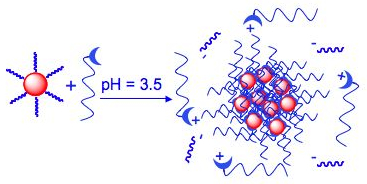
Figure 2: Spherical assemblies of Ag(0)
nanoparticles mediated by peptoid oligomers.
Ag(0) nanoparticles (A) before and (B) after
peptoid functionalization.2
We are studying peptidomimetic foldamers called  “peptoids”, which are N-substituted glycine oligomers (Figure 1A).  Peptoids are easily synthesized on solid support by the “submonomer” method – a repetitive two-step protocol in ambient conditions that typically requires short reaction times and no protection groups. Peptoids are also able to fold into helical structures in solution (Figure 1B). 
We are currently interested mainly in two topics:
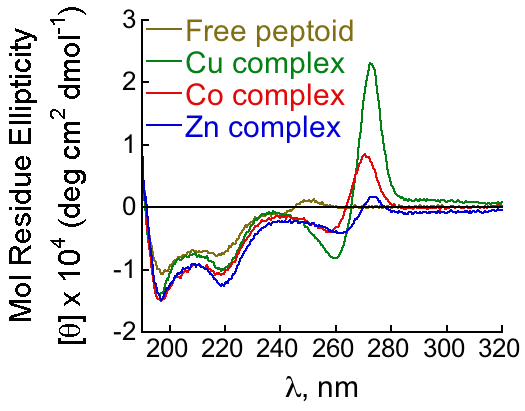
1. Interactions of Peptidomimetics with metal ions: We synthesize peptoids incorporating metal binding ligands and investigate their interactions with metal ions by spectroscopy and electrochemistry for applications in chiral sensing as well as asymmetric catalysis.1
2. Aggregation of metal nanoparticles mediated by biomimetic oligomers: We generate ensembles containing peptoids and metal nanoparticles and develop approaches for controlled aggregation, targeting homogeneous nanoparticles assemblies with various sizes and shapes. These unique assemblies will be characterized by advanced spectroscopic and microscopic techniques and will be utilized for chemical and/or biological sensing. Their chiroptical properties will be also evaluated towards applications in asymmetric catalysis.
Selected Publications
1. Galia Maayan, Kent Kirshenbaum and Michael D. Ward, “Metallopeptoids.” Chemical Communications, 2009, 56-58.
2. Galia Maayan* and Li-Kai Liu, “Silver Nanoparticles Assemblies Mediated by Functionalized Biomimetic Oligomers”, Pept. Sci.,2011, 96 (5), 679-687.


Welcome!

To The Fascinating World of Functional Foldamers in The Research Lab of

  Prof. Galia Maayan

Galia Maayan, PhD
Assistant Professor
Schulich Faculty of Chemistry, room # 415A
Technion – Israel Institute of Technology Technion City, Haifa 32000, Israel.
Telephones: 972-4-8293947 (office), 8292569 (lab), 8293678 (students office)
Foldamers are synthetic oligomers that fold into three dimensional architectures in solution upon non-covalent interactions, created in order to mimic the structure and function of natural biopolymers.                                                                               
We are making functional foldamers for the following applications:
              Catalysis                    Metal-binding              Chiral Spectroscopy                  Nanomaterials
                                                          

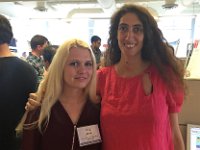
Galia Maayan (Technion) and Christian Olsen (U. Copenhagen).

http://www.peptoids.org/peptoids_website_additional_files/9PS_photo_gallery/


////////