One Organic Chemist One Day............Honouring Profiles of leading Organic Chemists brought to you by DR ANTHONY MELVIN CRASTO, worlddrugtracker, helping millions, amcrasto@gmail.com, +91 9323115463, India, skype amcrasto64
DR ANTHONY MELVIN CRASTO Ph.D ( ICT, Mumbai) , INDIA 29Yrs Exp. in the feld of Organic Chemistry,Working for GLENMARK PHARMA at Navi Mumbai, INDIA. Serving chemists around the world. Helping them with websites on Chemistry.Million hits on google, world acclamation from industry, academia, drug authorities for websites, blogs and educational contribution
M.Sc. Ph. D. Chemistry & currently working with Dr. Reddy’s laboratories, Hyderabad as Manager-R&D.He has total 17 years of experience in API Research and development in pharmaceutical companies. He wants to take new challenges in the research field.
He is interested in finding a suitable position where I can use my skills in research and development.
He has a broad range of skills, including:
*Adept in synthetic organic chemistry with expertise in design of non-infringing, cost effective, scalable and safe synthetic route in line with QbD.
*Generating standard scientific documents related to pre and post-product development phases.
*Capability to drive process robustness & cost reduction projects of commercialised HRM & LRM products.
*Review and response to queries from various regulatory authorities.
*Practicing and implementing GLP, GMP and SHE policies.
*Excellent Project management & ability to collaborate with cross-functional teams.
Responsible
to Identify, develop and implement new R&D projects and
technologies, Development & optimization of HPAI & API
processes, keeping view of commercial and quality aspect. Provide
technical guidance to team members and coordinate with other
departments. Investigation of OOS/OOT batches, catalysts recovery &
trouble shooting in production batches etc. Involved in API Cost
improvement of HRM & LRM products and process robustness projects.
Evaluation and Implementation of PAT tecnologies in the processes.
Process
development of Active pharmaceutical ingredients through various phases
like literature search for the optimization of synthetic methodology
and design schemes for possible execution of the synthesis, Conduct
feasibility, optimisation, laboratory validation experiments, and
demonstrating process at production level. Support for DMF filing
documents
SYNTHESIS
AND CHARACTERISATION OF THIENOPYRIDINE SULPHONAMIDES, PIPERAZINE &
PIPERIDINE CONTAINING NITROSO UREA ANALOGUES AND THEIR IN VITRO
BIO-EVALUATION (ANTIMICROBIAL AND ANTICANCER ACTIVITY) BESIDES
DEVELOPMENT OF A NEW SYNTHETIC METHODOLOGY.
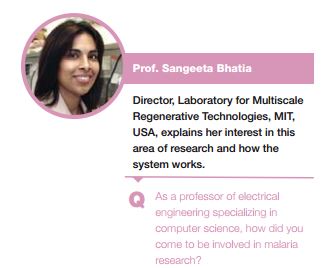
"Our laboratory conducts research at the intersection of engineering, medicine, and biology to develop novel platforms for understanding, diagnosing and treating human disease. Our long-term goals are to improve cellular therapies for liver disease, develop microtechnology tools to systematically study living cells, and design multifunctional nanomaterial systems which assemble and communicate to interrogate and coordinately treat cancer. We have developed technologies for interfacing living cells with synthetic systems, enabling new applications in tissue regeneration, stem cell differentiation, medical diagnostics and drug delivery. One such platform applies microfabrication technologies used in semiconductor manufacturing to organize cells of different types to produce a tissue with emergent properties. These efforts have produced human microlivers which model human drug metabolism, drug-induced liver disease, and interaction with human pathogens, thereby establishing high-throughput models that are being used for drug testing, discovery, and tissue engineering applications. We are also involved in a multidisciplinary effort to develop nanomaterials as tools for biological studies and as multifunctional agents for cancer therapies. By bridging the unique electromagnetic properties of nanomaterials with advances in bioconjugate chemistry, photonics, and phage display we aim to develop ‘intelligent' systems for tumor therapy and biomolecular detection. Our interest centers around nanoparticles and nanoporous materials that can be designed to perform complex tasks such as home to a tumor, sense changes in cells and tissues, enhance imaging, recruit complementary nanoparticles and signal pathways, and trigger the release of a targeted, therapeutic payload.”
Learn more about the work the Bhatia Lab is doing to use micro and nanotechnologies to improve the effectiveness of chemotherapy by watching this video: "Inside the Lab: Sangeeta Bhatia, M.D., Ph.D."
The Bhatia Lab's work is profiled as part of the current interactive exhibits in the Koch Institute Public Galleries. Watch a web version of the story here.
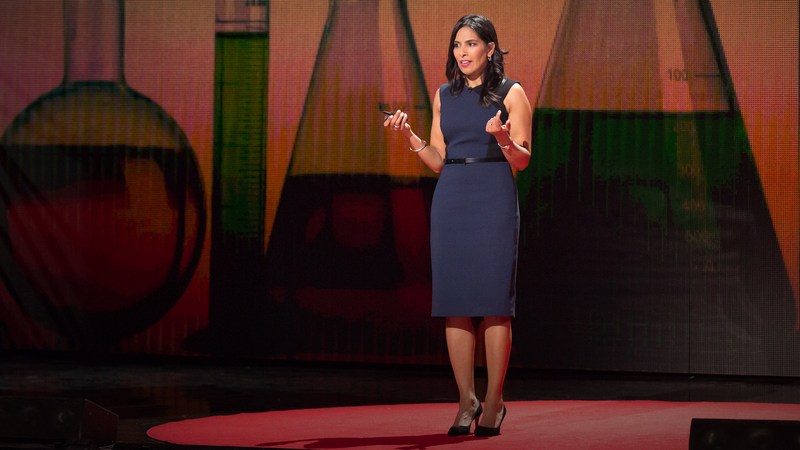
Trained as both a physician and engineer, Dr. Bhatia has pioneered technologies for interfacing living cells with synthetic systems, enabling new applications in tissue regeneration, stem cell differentiation, medical diagnostics and drug delivery. Her multidisciplinary team has developed a broad and impactful range of inventions, including human micro livers which model human drug metabolism, liver disease, and interaction with pathogens, and a suite of communicating nanomaterials that can be used to interrogate, monitor and treat cancer and other diseases. Her work has been profiled broadly such as in Scientific American, the Boston Globe, Popular Science,Forbes, PBS’s NOVA scienceNOW, The Economist, and MSNBC.
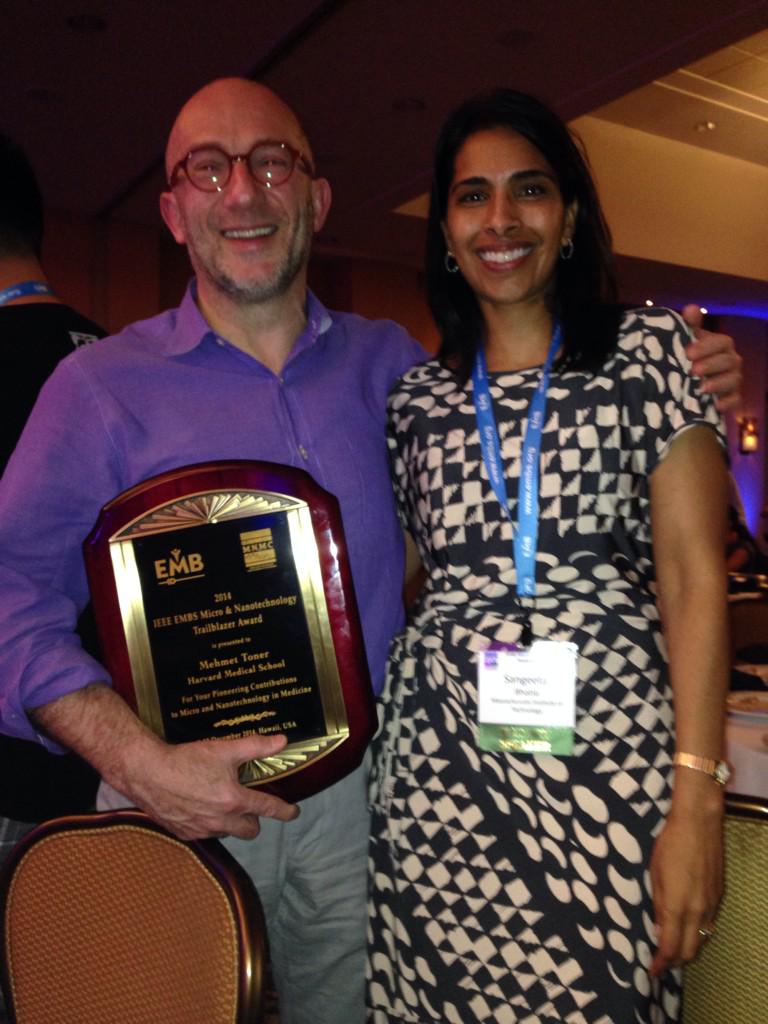
Dr. Bhatia trained at Brown, MIT, Harvard, and MGH. She is an elected member of the National Academy of Engineering and the American Academy of Arts and Sciences, and she is a fellow of the Massachusetts Academy of Sciences, the Biomedical Engineering Society, the American Institute for Medical and Biological Engineering, and the American Society for Clinical Investigation. She has been awarded the 2015 Heinz Award for Technology, the Economy and Employment; the 2014 Lemelson-MIT Prize; the David and Lucile Packard Fellowship given to “the nation’s most promising young professors in science and engineering;” the NSF CAREER Award; the Y.C. Fung Young Investigator Award of the American Society of Mechanical Engineers; the Young Investigator Award of the American College of Clinical Pharmacology; and the Brown Engineering Alumni Medal. She also was named a Merkin Fellow of the Broad Institute.
As a passionate mentor and advocate for diversity in science and engineering, she has been the recipient of the Harvard Medical School Diversity Award and the Harvard-MIT Thomas McMahon Mentoring Award. She co-authored the first undergraduate textbook on tissue engineering and is a frequent advisor to governmental organizations on nanobiotechnology, biomedical microsystems, and tissue engineering.
She and her over 150 trainees have contributed to more than 40 issued or pending patents and launched 10 biotechnology companies with 70+ commercial products at the intersection of medicine and miniaturization. She has published more than 150 manuscripts which have been cited a total of over 14,500 times. Prior to her position at MIT, she held a tenured position at UCSD, and has worked in industry at Pfizer, Genetics Institute, ICI Pharmaceuticals, and Organogenesis.
Bhatia co-authored the first undergraduate textbook on tissue engineering and was an editor for two books, Microdevices in Biology and Medicine and Biosensing.
Background
Bhatia's parents emigrated from India to Boston, Massachusetts; her father was an engineer and her mother was one of the first women to receive an MBA in India. She was motivated to become an engineer after her 10th grade biology class and a trip with her father into an MIT lab to see a demonstration of an ultrasound machine for cancer treatment.[5]
Bhatia has two daughters with her husband, Jagesh Shah.[5]
Research
Dr. Bhatia's research in the Laboratory for Multiscale Regenerative Technologies is focused on the applications of micro- and nanotechnology to tissue repair and regeneration.
Specifically, she studies the interactions between hepatocytes (liver cells) and their microenvironment and develops microfabrication tools to improve cellular therapies for liver disease (Hepatic Tissue Engineering). The goal is to maximize hepatocyte function, facilitate design of effective cellular therapies for liver disease, and improve fundamental understanding of liver physiology and pathophysiology. She is also interested in using arrays of living cells as high-throughput platforms to study fundamental aspects of stem cellbiology (Cell-Based BioMEMS) using a diverse repertoire of tools including chemical, topological, fluidic, electrical, and optical manipulation of living cells on chip platforms. Finally, LMRT is involved in a multidisciplinary effort to develop nanomaterials as tools for biological studies and as multifunctional agents for cancer therapies. Interests center around nanoparticles and nanoporous materials that can be designed to perform complex tasks such as: home to a tumor, sense changes in cells and tissues, enhance imaging, and trigger the release of a therapeutic payload. Having had several stints in the biotechnology industry, Dr. Bhatia holds a number of patents for both clinical and biotechnological applications of engineering principles. She is the author of Microfabrication in Tissue Engineering and Bioartificial Organs and co-author of the undergraduate textbook Tissue Engineering.


 ,
,