DR ANTHONY MELVIN CRASTO,WorldDrugTracker, helping millions, A 90 % paralysed man in action for you, I am suffering from transverse mylitis and bound to a wheel chair,With death on the horizon, This will not stop me, Gods call only..........
DR ANTHONY MELVIN CRASTO Ph.D ( ICT, Mumbai) , INDIA 29Yrs Exp. in the feld of Organic Chemistry,Working for GLENMARK PHARMA at Navi Mumbai, INDIA. Serving chemists around the world. Helping them with websites on Chemistry.Million hits on google, world acclamation from industry, academia, drug authorities for websites, blogs and educational contributio
n

Saturday, 9 July 2016

Malika Makhlouf , Process Research Chemist at Synphabase

Malika Makhlouf.

Malika Makhlouf

Process Research Chemist at Synphabase


Links

https://ch.linkedin.com/in/malika-makhlouf-ab294553

https://twitter.com/malikamakhlouf

Summary

My Professional Experience:

I completed my Ph.D thesis in organic chemistry at the University of Pierre & Marie Curie in Paris then, I pursued postdoctoral research in medicinal chemistry. Currently, I am working as a process research chemist for Synphabase company.

My Expertise:

I have extensive experience in multi-step organic synthesis with a thorough knowledge of modern synthetic methods, new product development, and product improvement.
I enjoy taking up new intellectual challenges, find innovative solutions and share my experience in a team. I am always interested to learn new concepts through literature research and apply them in a unique way.

My Personal Qualities:

I have learned to work and communicate with people from various backgrounds. I am flexible and highly motivated to work in a team.

Malika Makhlouf

Experience


Process Research Chemist

SynphaBase AG
 – Present (3 years 4 months)Basel Area, Switzerland
CUSTOM SYNTHESIS:
- Development and improvement of known and new synthetic routes to meet specifications
- Working with complex molecules including Active Pharmaceutical Ingredients (APIs)
- Developing scalable process using in-house and state-of-the-art technology, including statistical design of experiments (DOE)
- Support of process scale-up in Kilo-Lab
- Managing projects


Marketing and PR committee

Healthcare Businesswomen’s Association
 – Present (1 year 9 months)Basel Area, Switzerland
Healthcare Businesswomen's Association 2015


Postdoctoral Research Scientist

University of Basel
 –  (2 years 3 months)Basel Area, Switzerland
• Multi-step synthesis and biological evaluation of organic molecules derived from natural products

• Isolation of natural products

Prof. Dr. Karl Gademann
Cyanobacteria Culture


PhD Student in Organic Chemistry

University P.Curie UPMC-Paris6
 –  (3 years 4 months)
Investigation of the Reactivity of NHC-Boranes Complexes

N-heterocyclic carbenes boranes (NHC-Boranes) complexes are novel structures whose reactivity —especially organic— has not been explored. Our goal was to investigate the influence of the NHC complexation on the reactivity at the boron atom.

Director: Prof. Dr. Max Malacria

Supervisor: Prof. Dr. Louis Fensterbank, Dr. Emmanuel Lacôte, Prof. Dr. Dennis P. Curran
JACS_2008
JACS_2008
NHC-Borane
NHC-Borane


Research Internship

Sanofi
 –  (5 months)Chilly-Mazarin, southern suburbs of Paris
Synthesis of biologically active compound

Publications


Substituent Effects in NHC-Boranes: Reactivity Switch in the Nucleophilic Fluorination of NHC- Boranes.(Link)

Synlett
2013
Substituents on the boron atom of NHC–boranes direct the reactivity of the ligated boreniums obtained through hydride abstraction. Depending on the electronics of the substituent, the reaction is selectively steered toward either B-substitution or Lewis base exchange.


Chem. Eur. J.
January 31, 2013
By using the Telospot assay, 27 different extracts of cyanobacteria were evaluated for telomerase inhibition. All extracts showed varying, but significant activity. We selected Microcystis aeruguinosa PCC 7806 to identify the active compound and a bioassay guided fractionation led us to isolate mixtures of sulfoquinovosyl diacylglycerols (SQDGs), which were identified by 2D NMR and MS/MS...more
(Ope


Synthesis and Reactions of N-Heterocyclic Carbene Boranes.(Link)

Angew. Chem. Int. Ed.
September 7, 2011
Boranes are widely used Lewis acids and N-heterocyclic carbenes (NHCs) are popular Lewis bases, so it is remarkable how little was known about their derived complexes until recently. NHC-boranes are typically readily accessible and many are so stable that they can be treated like organic compounds rather than complexes. They do not exhibit “borane chemistry”, but instead are proving to have a rich...more


Electron Paramagnetic Resonance and Computational Studies of Radicals derived from Boron-Substituted N-Heterocyclic Carbene Boranes.(Link)

J. Am. Chem. Soc.
May 28, 2011
Fifteen second-generation NHC-ligated boranes with aryl and alkyl substituents on boron were prepared, and their radical chemistry was explored by electron paramagnetic resonance (EPR) spectroscopy and calculations. Hydrogen atom abstraction from NHC–BH2Ar groups produced boryl radicals akin to diphenylmethyl with spin extensively delocalized across the NHC, BH, and aryl units. All of the NHC–B·...more Curie


Preparation of NHC Borane Complexes by Lewis Base Exchange with Amine− and Phosphine−Boranes.(Link)

J. Org. Chem.
September 14, 2010
A versatile new method for the preparation of NHC boranes starting from two stable, readily available reactants―an heterocyclic salt and an amine or phosphine−borane―is reported. It uses a Lewis base exchange at boron and provides easy access to new NHC boranes, in particular B-substituted borane ones.Curie


N-Heterocyclic Carbenes−Borane Complexes: A New Class of Initiators for Radical Photopolymerization.(Link)

Macromolecules
February 8, 2010
Newly discovered N-heterocyclic carbene-boryl radicals (NHC-BH2•) derived from readily available N-heterocyclic carbene−boranes are found to be efficient initiators for acrylate photopolymerization. Laser flash photolysis (LFP) experiments were used to generate three carbene-boryl radicals, which were characterized by their transient absorption spectra with the aid of DFT calculations. Rate...more


EPR Studies of the Generation, Structure, and Reactivity of N-Heterocyclic Carbene Borane Radicals.(Link)

J. Am. Chem. Soc
January 27, 2010
N-Heterocyclic carbene boranes (NHC−boranes) are a new “clean” class of reagents suitable for reductive radical chain transformations. Their structures are well suited for their reactivity to be tuned by inclusion of different NHC ring units and by appropriate placement of diverse substituents. EPR spectra were obtained for the boron-centered radicals generated on removal of one of the BH3...more


Ionic and Organometallic Reductions with N-Heterocyclic Carbene Boranes.(Link)

Chem. Eur. J.
November 4, 2009
N-Heterocyclic carbene–borane complexes such as depicted are neutral, organic soluble analogues of borohydride anions with a weak hydridic character, compatible with organometallic catalysis. They are applicable for surgical reductions in complex, multifunctional molecules.


Suzuki-Miyaura Coupling of NHC-Boranes: A New Addition to the C-C bond Toolbox(Link)

Org. Lett.
October 2, 2009
Complexes of triaryl- and trialkylboranes with N-heterocyclic carbenes (NHCs) participate in Suzuki−Miyaura cross-coupling reactions and provide coupled products in good yields under base-free conditions. The reaction can be applied to Csp2−Csp2 and Csp2−Csp3 carbon−carbon bond formation with triflates, iodides, bromides, and chlorides. These results enrich the utility of NHC−borane complexes,...more


Complexes of Borane and N-Heterocyclic Carbenes: A New Class of Radical Hydrogen Atom Donor(Link)

J. Am. Chem. Soc.
July 9, 2008
Calculations suggest that complexes of borane with N-heterocyclic carbenes (NHC) have B−H bond dissocation energies more then 20 kcal/mol less than free borane, diborane, borane−THF, and related complexes. Values are in the range of popular radical hydrogen atom donors like tin hydrides (70−80 kcal/mol). The resulting prediction that NHC borane complexes could be used as radical hydrogen atom...more

Education


Université Pierre et Marie Curie (Paris VI)

Bachelor of Science (BS), Chemistry


Synphabase Welcome to SynphaBase 
SynphaBase AG has been founded in December 2000. We are located in Pratteln, Switzerland.
We offer MULTI-STEP SYNTHESIS on a mg-scale up to multi metric tons.
Our catalogue comprises more than 500 compounds:
  • CARBOHYDRATES, GLYCANS, SUGARS, MONOSACCARIDES, DISACCHARIDES (blood group antigen H), OLIGOSACCHARIDES (blood group antigen A, blood group antigen B)
  • natural amino acids, unnatural amino acids
  • nucleosides
  • various SMALL MOLECULES: aromatics and heterocyclics
Our services are LAB SCALE SYNTHESIS, ROUTE FINDING & PROCESS DEVELOPMENT and PRODUCTION of small molecules and human glycans.


SynphaBase AG | Gueterstrasse 82 | CH-4133 Pratteln | Switzerland 
T +41 61 827 7900 | F +41 61 827 7999 | office@synphabase.ch

Synphabase Contact 
SynphaBase AG
Gueterstrasse 82, Bau 3
CH-4133 Pratteln
Switzerland

T +41 61 827 7900
F +41 61 827 7999
office@synphabase.ch

How to find us
From (Basel, Bern or Zurich) take A2 exit Pratteln,
direction Pratteln, at the 1st roundabout take the first right direction
Industriegebiet West straight on through 2 roundabouts.
After ca. 500m turn right direction Pratteln West
on top of the ramp turn left, after 200m turn left again,
into Magnet Areal.

For satnav use N 47°31'20'', E 7°40'16'' or  Pratteln, Güterstrasse 105

Pratteln, Güterstrasse


///////////

Friday, 8 July 2016

Miri Zilka

Miri


Miri Zilka

Hello and welcome! My name is Miri and in September 2013 I came from Israel to Warwick to start my PhD in the solid-state NMR group. I'm a theoretical physicist in background and in heart, and a true believer in combining theoretical and experimental work.
Please feel free to contant me at m.zilka@warwick.ac.uk

My Project: Detailed structural analysis of excipients, active ingredients, and their release mechanisms and rates in drug formulations using solid-state NMR

Understanding the dissolution mechanism of active pharmaceutical ingredient from its formulation matrix is a crucial part in the development of a new drug. The dissolution process, as well as the crystallization process, are both intimately correlated with the ground state energy surface of the crystalline state.
My goal is to use state of the art solid state NMR experiments, first principles calculations, and simulations to promote better understanding of dissolution in APIs and its relation to crystal structure, polymorphism and interaction energy.

Academic History


Education

2008 - 2011 B.Sc. summa cum laude in the Department of Physics, Tel-Aviv University as a combined program.
2010 - 2012 B.Sc in Biology, Faculty of life sciences, Tel-Aviv University as a combined program.

2011 - 2014 M.Sc. in theoretical physics in Tel-Aviv University.
Thesis subject: Modeling the Feeding Mechanism in Larval Fish.
Advisors: Prof. Eli Eisenberg, Department of Physics, TAU.
Dr. Roi Holzman, Department of Zoology in TAU and
the Inter-University institute for marine science in Eilat.

Additional Research Experience

2009 - 2011 Working as a research assistant for Prof. Amiel Sternberg, Department of Astronomy & Astrophysics, TAU. Subject: Massive black hole in the galactic center.
2010 - 2011 Working as a research assistant for Prof. Eli Eisenberg, Department of Condensed Matter Physics, TAU.
Subject: Out of equilibrium dynamics in a two dimensional quasicrystal model.

2011 Research project under the supervision of Prof. Yoav Gothilf, Department of Neurobiology, TAU.
Subject: The circadian clock in larval zebra fish.

2011 - 2012 Working as a research assistant for prof. Nir Gov, Dept. of Chemical Physics, Weizmann Institute of Science.
Subject: Biophysics of Cellular Membranes.

2012 Research project under the supervision of Dr. Yossy Yovel, Department of Zoology, TAU.
Subject: Spatial localization in fruit bats.


 links
 https://www.facebook.com/mirizi/about
 https://twitter.com/mirizilka

  miri_small


12th June 2014

Workshop at AstraZeneca, Macclesfield

Miri Zilka gave a lecture entitled “Modelling dissolution & crystal growth” at a workshop on understanding Dissolution attended by researchers from Warwick, Nottingham and Sheffield Universities.


miriMiri Zilka
Department: Chemistry
Supervised by: Steven P. Brown
Funded by: CAS-IDP
M.Zilka@warwick.ac.uk


 Miri Zilka


/////////

Dr Marcella Bassetto


Dr Marcella Bassetto

Dr Marcella Bassetto

Post Doctoral Research Associate


bassettom@cardiff.ac.uk
https://www.researchgate.net/profile/Marcella_Bassetto
http://marcellabassetto.blogspot.in/
Cardiff University


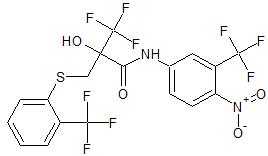
 Her molecule


 STR1.jpg

3,3,3-trifluoro-2-hydroxy-N-(4-nitro-3-(trifluoromethyl)phenyl)-2-(((2-(trifluoromethyl)phenyl)thio)methyl)propanamide

Cas 1929605-82-2
MF C18 H11 F9 N2 O4 S,  MW 522.34
New bicalutamide and enzalutamide derivatives as antiproliferative agents for the treatment of prostate cancer
School of Pharmacy and Pharmaceutical Sciences, Redwood Building, King Edward VII Avenue, CF10 3NB, Cardiff, Wales, UK

SYNTHESIS
Synthetic strategy used in the synthesis of 52. Reagents and conditions: (a) NaH ...
Scheme .
Synthetic strategy used in the synthesis of 52. Reagents and conditions: (a) NaH (1 equiv.), THF, 0 °C to RT, 3 h; (b) KCN (1.2 equiv.), 25% H2SO4, 0 °C to RT, 20 h; c) HCl, AcOH, reflux, 24 h; (d) 8, SOCl2(1.3 equiv.), DMA, RT, 72 h.
3-Bromo-1,1,1-trifluoroacetone (48) was coupled with thiophenol 47 to afford 49, which was then converted into cyano derivative 50 using potassium cyanide and 25% sulfuric acid [16]. Intermediate 51 was obtained after refluxing 50 in concentrated HCl and glacial acetic acid. Coupling of 51 with commercially available 4-nitro-3-(trifluoromethyl)aniline 8yielded the desired amide 52.

 Synthesis of 1,1,1-rifluoro-3-((2-(trifluoromethyl)phenyl)thio)propan-2-one (49)

To a mixture of NaH (10.47 mmol) in 10 mL anhydrous THF was added a solution of 2-(trifluoromethyl)benzenethiol (10.47 mmol) in 2mL anhydrous THF at 0 °C. This mixture was stirred for 20 min. 3-Bromo-1,1,1-trifluoropropan-2-one was then added dropwise to the mixture at 0 °C, the reaction was warmed to r.t. and stirred for 12 h. The mixture was filtered trough celite, the filtered pad was washed with THF, and the filtrate was evaporated to dryness. The residue was purified by flash column chromatography eluting with n-hexane/EtOAc 100:0 v/v increasing to n-hexane/EtOAc 85:15 v/v to give a pale yellow oil in 93% yield. 1H-NMR (CDCl3): d 7.76-7.69 (m, 2H), 7.60-7.53 (m, 1H), 7.42-7.38 (m, 1H), 3.44 (s, 2H). 19F-NMR (CDCl3): d -59.91 (s, 3F), -85.26 (s, 3F). 13C-NMR (CDCl3): d 189.6, 137.7, 135.9, 134.5, 133.2, 130.6, 129.6 (q, J= 26.3 Hz), 127.0 (q, J= 3.8 Hz), 124.3 (q, J= 4.1 Hz), 124.0 (q, J= 3.7 Hz), 94.4 (q, J= 30.4 Hz), 40.4.

Synthesis of    3,3,3-trifluoro-2-hydroxy-2-(((2-(trifluoromethyl)phenyl)thio)methyl)propanenitrile (50)

A 20% aqueous solution of H2SO4 (3.4 mL) was added dropwise to a mixture of 49 (11.03 mmol) and KCN (13.24 mmol) in 5 mL H2O at 0 °C. The reaction mixture was warmed to r.t. and stirred for 20 h. The mixture was then diluted with water (50 mL) and extracted with Et2O (3 x 150 mL). The organic extracts were washed with sat. aq. NaHCO3 and brine, dried over Na2SO4 and concentrated in vacuo. The residue was purified by flash column chromatography eluting with n-hexane/EtOAc 100:0 v/v increasing to n-hexane/EtOAc 95:5 v/v to give a pale yellow oil in 86% yield. 1H-NMR (CDCl3): d 7.80 (d, J= 7.8 Hz, 1H), 7.77-7.76 (m, 1H), 7.72-7.59 (m, 1H), 7.52-7.49 (m, 1H), 4.36 (bs, 1H), 3.58 (d, J= 14.6 Hz, 1H), 3.44 (d, J= 14.6 Hz, 1H). 19F-NMR (CDCl3): d -57.08 (s, 3F), -79.51 (s, 3F). 13C-NMR (CDCl3): d 135.4, 132.8, 132.5 (q, J= 30.1 Hz), 129.1, 128.7 (q, J= 5.5 Hz), 126.7, 124.9, 124.6, 122.6, 122.4, 120.4, 114.0, 71.4 (q, J= 32.9), 40.75.

1.1.1        Synthesis         of         3,3,3-trifluoro-2-hydroxy-2-(((2-(trifluoromethyl)phenyl)thio)methyl)propanoic acid (51)

A mixture of 51 (6.89 mmol), concentrated HCl (23.4 mL) and AcOH (4.1 mL) was refluxed o.n. with vigorous stirring. The mixture was then diluted with water (100 mL) and extracted with Et2O (4 x 100 mL), which was in turn washed with sat. aq. NaHCO3 (4 x 100 mL). The water solution was acidified with concentrated HCl to pH 1 and extracted with Et2O (4x 150 mL). The Et2O extracts were dried over Na2SO4, filtered and concentrated to dryness to give a pale yellow waxy solid in 41% yield. 1H-NMR (CDCl3): d 9.57 (bs, 1H), 7.70 (d, J= 7.7 Hz, 1H), 7.67 (d, J= 7.7 Hz, 1H), 7.54-7.51 (m, 1H), 7.39-7.36 (m, 1H), 3.60 (s, 2H). 19F-NMR (CDCl3): d -60.10 (s, 3F), -77.7 (s, 3F). 13C-NMR (CDCl3): d 172.0, 134.1, 134.0, 131.2 (q, J= 30.1 Hz), 127.5, 126.7 (q, J= 5.6 Hz), 124.2 (q, J= 121.9 Hz), 121.9 (q, J= 126.7 Hz), 78.2 (q, J= 28.7 Hz), 37.7.

Synthesis of 3,3,3-trifluoro-2-hydroxy-N-(4-nitro-3-(trifluoromethyl)phenyl)-2-(((2-(trifluoromethyl)phenyl)thio)methyl)propanamide (52)

Thionyl chloride (1.16 mmol) was added dropwise to a stirring solution of 51 in anhydrous DMA at -10 °C under Ar atmosphere. The reaction mixture was stirred for 1 h, then a solution of 8 in 2 mL anhydrous DMA was added dropwise. The reaction mixture was warmed to r.t. and stirred for 72 h. The mixture was then diluted with sat. aq. NaHCO3 (40 mL) and extracted with Et2O (3 x 40 mL). The organic extracts were filtered trough celite, dried over Na2SO4 and evaporated to dryness. The residue was purified by flash column chromatography eluting with n-hexane/EtOAc 100:0 v/v increasing to n-hexane/EtOAc 80:20 v/v to give a pale yellow solid in 13% yield.
1H-NMR (CDCl3): d 8.93 (bs, 1H), 7.94 (d, J= 8.8 Hz, 1H), 7.87 (d, J= 2.2 Hz, 1H), 7.72 (d, J= 8.1 Hz, 1H), 7.69 (dd, J= 8.8 Hz, 2.2 Hz, 1H), 7.50-7.47 (m, 2H), 7.26-7.23 (m, 1H), 4.41 (s, 1H), 4.19 (d, 14.7 Hz, 1H), 3.45 (d, J= 14.7 Hz, 1H).
19F-NMR (CDCl3): d -59.7 (s, 3F), -60.12 (s, 3F), -77.4 (s, 3F).
13C-NMR (CDCl3): d 164.6, 143.8, 140.0, 134.7, 132.6, 131.1 (q, J= 29.8 Hz), 130.5, 128.3, 126.8 (q, J= 5.5 Hz), 126.7, 125.2 (q, J= 36.3 Hz), 124.5, 123.9, 122.6, 122.4, 122.2, 121.7, 120.4, 118.2 (q, J= 5.8 Hz), 76.3 (q, J= 27.8 Hz), 38.5.
MS [ESI, m/z]: 523.0 [M+H]+.
EI-HMRS (M-H)– found 521.0215, calculated for C18H0N2O4F9S 521.0218.
HPLC (method 1): retention time = 23.84 min.

clips
Prostate cancer (PC) is a leading cause of male death worldwide and it is the most frequently diagnosed cancer among men aged 65–74 [1]. The prognosis varies greatly, being highly dependent on a number of factors such as stage of diagnosis, race and age. Currently, PC treatment includes androgen deprivation, surgery, radiation, endocrine therapy and radical prostatectomy.
PC cell growth is strongly dependent on androgens, therefore blocking their effect can be beneficial to the patient’s health. Such outcomes can be achieved by antagonism of the androgen receptor (AR) using anti-androgen drugs, which have been extensively explored either alone or in combination with castration [2]. Flutamide (Eulexin®) (1) (in its active form as hydroxyflutamide (2)), bicalutamide (Casodex®) (3), nilutamide (Niladron®) (4) and enzalutamide (previously called MDV3100) (Xtandi®) (5) are all non-steroidal androgen receptor antagonists approved for the treatment of PC (Fig. 1). In many cases, after extended treatment over several years, these anti-androgens become ineffective and the disease may progress to a more aggressive and lethal form, known as castration resistant prostate cancer (CRPC). The major cause of this progressive disease is the emergence of different mutations on the AR, which cause the anti-androgen compounds to function as agonists, making them tumour-stimulating agents[3].
Structure of anti-androgen small molecules approved by FDA or in clinical ...
Fig. 1.
Structure of anti-androgen small molecules approved by FDA or in clinical development for the treatment of PC.
Among the drugs used for the treatment of PC, bicalutamide and enzalutamide selectively block the action of androgens while presenting fewer side effects in comparison with other AR antagonists [4], [5] and [6]. The structure of these molecules is characterised by the presence of a trifluoromethyl substituted anilide, which appears to be critical for biological activity (Fig. 1). As a means to improve the anti-proliferative activity of these compounds, and in order to exploit the well established potential of the fluorine atom in enhancing the pharmacological properties and drug-like physicochemical characteristics of candidate compounds [7], [8] and [9], a wide array of diverse new structures has been rationally designed and synthesised, through the introduction of fluoro-, trifluoromethyl- and trifluoromethoxy groups in diverse positions of both aromatic rings of the parent scaffolds. Our modifications resulted in a marked improvement of in vitro anti-proliferative activities on a range of human PC cell lines (VCap, LNCaP, DU-145 and 22RV1). In addition, we probed full versus partial AR antagonism for our new compounds.
Paper
Image for unlabelled figure
Volume 118, 8 August 2016, Pages 230–243
Research paper

Design and synthesis of novel bicalutamide and enzalutamide derivatives as antiproliferative agents for the treatment of prostate cancer

School of Pharmacy and Pharmaceutical Sciences, Redwood Building, King Edward VII Avenue, CF10 3NB, Cardiff, Wales, UK
This work is dedicated to the memory of Prof. Chris McGuigan, a great colleague and scientist, invaluable source of inspiration and love for research.

Highlights

•Synthesis of novel fluorinated bicalutamide and enzalutamide analogs.
•Anti-proliferative activity in four human prostate cancer cell lines improved up to 50 folds.
•Full AR antagonist effect exhibited by the new compounds.
•Activity switch from partial agonist to full AR antagonist for enobosarm scaffold.
•AR open conformation homology model and molecular modeling studies.

Abstract

Prostate cancer (PC) is one of the major causes of male death worldwide and the development of new and more potent anti-PC compounds is a constant requirement. Among the current treatments, (R)-bicalutamide and enzalutamide are non-steroidal androgen receptor antagonist drugs approved also in the case of castration-resistant forms. Both these drugs present a moderate antiproliferative activity and their use is limited due to the development of resistant mutants of their biological target.
Insertion of fluorinated and perfluorinated groups in biologically active compounds is a current trend in medicinal chemistry, applied to improve their efficacy and stability profiles. As a means to obtain such effects, different modifications with perfluoro groups were rationally designed on the bicalutamide and enzalutamide structures, leading to the synthesis of a series of new antiproliferative compounds. Several new analogues displayed improved in vitro activity towards four different prostate cancer cell lines, while maintaining full AR antagonism and therefore representing promising leads for further development.
Furthermore, a series of molecular modelling studies were performed on the AR antagonist conformation, providing useful insights on potential protein-ligand interactions.
http://www.sciencedirect.com/science/article/pii/S0223523416303452

Top cancer scientist dies of the disease he spent his life trying to cure

Professor Chris McGuigan, 57, of Cardiff University, was trying to invent new drugs to use in the fight against the disease

Professor Chris McGuigan
A university spokesman described Prof McGuigan as ‘exceptionally gifted’
Professor Chris McGuigan, 57, was trying to invent new drugs to use in the fight against the disease.
But the tragic scientist, who was head of medicinal chemistry at Cardiff University’s School of Pharmacy and Pharmaceutical Sciences, died after his own fight with cancer.
A spokesman for Cardiff University said: “Professor McGuigan had been at the heart of scientific research for more than 30 years. He was an exceptionally gifted inventor and chemist.
“His loss will be felt cross the university and the wider scientific community.
South Wales EchoPatricia Price
Prof McGuigan invented four new experimental drugs that were used in human clinical trials
“He had a strong drive to use his scientific ideas for social good, working tirelessly to address medical needs where they were unmet.
“Our thoughts are with his family, friends and close colleagues at this very sad time.”
Prof McGuigan’s research led him to try and develop new drugs for cancer, HIV, hepatitis B and C, shingles, measles, influenza and central nervous system (CNS) disease.
He also invented four new experimental drugs that were used in human clinical trials.
Prof McGuigan, who lived in Cardiff, is survived by wife Maria, 50, and his two young daughters Phoebe and Grace


.////////////////////