|
|---|
|
One Organic Chemist One Day............Honouring Profiles of leading Organic Chemists brought to you by DR ANTHONY MELVIN CRASTO, worlddrugtracker, helping millions, amcrasto@gmail.com, +91 9323115463, India, skype amcrasto64
DR ANTHONY MELVIN CRASTO Ph.D ( ICT, Mumbai) , INDIA 29Yrs Exp. in the feld of Organic Chemistry,Working for GLENMARK PHARMA at Navi Mumbai, INDIA. Serving chemists around the world. Helping them with websites on Chemistry.Million hits on google, world acclamation from industry, academia, drug authorities for websites, blogs and educational contribution
Tuesday, 18 October 2016
Yong Tang
Armando J. L. Pombeiro
|
|---|
|
Armando J. L. Pombeiro got his PhD at University of Sussex (under the supervision of Prof. J. Chatt and Prof. R. L. Richards), is/was Vice-President of the Class of Sciences of the Academy of Sciences of Lisbon, Secretary-General of this Academy and a representative at ICSU (International Council for Science), EASAC (European Academies Science Advisory Council) and ESF (European Science Foundation), President of the Portuguese Electrochemical Society (co-founder of this Society and of its journal), member of the Higher Council for Science, Technology and Innovation (Portugal), member of External Evaluation Commissions of various Universities, and of scientific and advisory NATO panels. He is the Director of the PhD Program on “Catalysis and Sustainability” (CATSUS) and the Coordinator of the scientific area of “Synthesis, Molecular Structure and Chemical Analysis” (IST).
His research Group on Coordination and Organometallic Chemistry, Molecular Electrochemistry, Synthesis and Catalysis, addresses the activation of small molecules (e.g., functionalization of alkanes under mild conditions) with industrial, environmental or biological significance, including metal-mediated synthesis and catalysis, crystal engineering and self-assembly of polynuclear and supramolecular structures, complexes with bioactivity, high pressure gas reactions, molecular electrochemistry of coordination compounds (redox potential-structure relationships and induction of reactivity by electron-transfer), and theoretical studies. He was the Chairman or member of organizing/scientific committees of ca. 40 international conferences or schools, including the XXV International Conference on Organometallic Chemistry (XXV ICOMC, Lisbon, 2012). Editor of the silver/gold Jubilee ICOMC celebratory book “Advances in Organometallic Chemistry and Catalysis” (J. Wiley, ISBN: 9781118510148). He has been awarded the Madinabeitia-Lourenço Prize (Spanish Royal Chemical Society) and other prizes for the excellence and productivity of his research. He has supervised over 85 PhD or MSc students and Post-Doc Fellows, edited 3 books, authored another one, (co-)authored ca. 600 research publications (including 75 chapters in books or reviews), 33 patents, 510 conference communications, and presented 90 invited lectures at international conferences. His work has received ca. 11,000 citations, h-index = 48 (ISI Web of Knowledge). |
Sunday, 16 October 2016
Ming-Wei Wang
Ming-Wei Wang, M.D., Ph.D.
Director, the National Center for Drug Screening;
Professor, Shanghai Institute of Materia Medica, Chinese Academy of Sciences, China
Dr. Ming-Wei Wang obtained his medical degree from Shanghai Medical University in 1982. Following a practice as an orthopedic surgeon in Shanghai, he attended UCLA School of Medicine and the Institute of Animal Physiology at Cambridge, U.K. He was awarded a Ph.D. degree in physiology by University of Cambridge in 1989 and started his research career in several US-based biotechnology companies, including Amylin Pharmaceuticals and Ligand Pharmaceuticals. He was heavily involved in entrepreneur activities and co-funded several biopharmaceutical start-up companies in the U.S., U.K., China and Hong Kong.
Dr. Wang was appointed as a professor of pharmacology at the Shanghai Institute of Materia Medica, Chinese Academy of Sciences (CAS) and executive deputy director of the Chinese National Center for Drug Screening in 2001. The WHO/TDR named him as one of the 12 expert members for the Thematic Reference Group on Innovation and Technology, Shanghai Clinical Research Center appointed him as a Senior Advisor on International Business Affairs and Chinese Academy of Medical Sciences/Peking Union Medical College made him Guest Professor.
Dr. Wang has published more than 170 research papers, received a number of academic awards or social honors from the U.K., U.S., Taiwan and China, and obtained 63 international patents. Dr. Wang’s research achievements include the discovery of the first non-peptidic glucagon-like peptide-1 receptor agonist (Boc5), the determination of the 3-D structure of the human glucagon receptor (in collaboration with Dr. Raymond C. Stevens) and its conformational states (jointly with Drs. Hualiang Jiang and Raymond C. Stevens), the elucidation of the insulinotrophic effect of insulin-like peptide 5 (INSL5) as well as the identification of the oncologic link of GPR160, an orphan G-protein coupled receptor.
| |||||||||||||||||||||
| |||||||||||||||||||||
Professor Ming-Wei Wang meets Mrs. Caryn Peterson in San Diego
Professor Ming-Wei Wang, Director of the National Center for Drug Screening (NCDS) and the Chinese National Compound Library, met with Mrs. Caryn Peterson, Scientific Advisor to NCDS and Partner of Development and Strategic Consulting (Encinitas, CA), in San Diego (California, USA) in the afternoon of February 4, 2014. Opinions concerning recent changes in transnational regulatory environment for drug discovery were broadly exchanged between them.
Dr. Ming-Wei Wang visits Shanghai Biotecan Diagnostics
In the morning of January 18, 2013, Professor Ming-Wei Wang, Director of the National Center for Drug Screening/Chinese National Compound Library, visited Shanghai Biotecan Medical Diagnostics Co., Ltd. Mr. Jingwei Lou, General Manager of Biotecan, and his associates warmly welcomed Dr. Wang. Both parties discussed in great detail regarding potential collaboration opportunities in personalized medicine.
Professor Ming-Wei Wang visits Genelux Corp. in San Diego
Professor Ming-Wei Wang, Director of the National Center for Drug Screening and the Chinese National Compound Library, visited Genelux Corporation located in San Diego (California, USA) in the afternoon of July 3, 2014. A warm reception was given by Mr. Thomas Zindrick (President and CEO) and his associates. After delivering a lecture on class B GPCRs, Dr. Wang had an interesting discussion with some senior scientists of the company.
Dr. Ming-Wei Wang meets Dr. Min Cui of Decheng Capital in Palo Alto
Professor Ming-Wei Wang, Director of the National Center for Drug Screening and the Chinese National Compound Library, met with Dr. Min Cui, Managing Director and Founder of Decheng Capital in the morning of February 1, 2014. They conducted a productive discussion concerning the development of "companion" diagnostics, among other topics, during the breakfast session held at the heart of "Silicon Valley" - Palo Alto, California, USA.
Professor Ming-Wei Wang met with Professor Peter K. Vogt
In the afternoon of August 2, 2012, Professor Ming-Wei Wang, Director of the National Center for Drug Screening/Chinese National Compound Library, visited the Scripps Research Institute (TSRI) and met with its Executive Vice President and Chief Scientific Officer, Professor Peter K. Vogt. They warmly discussed various topics relating to bilateral collaboration. Dr. Lujian Liao, who will soon return to China and join the National Center for Protein Science (Shanghai), was present in the meeting.
Dr. Ming-Wei Wang meets Dr. Zhen Zhang of Fudan University
Professor Ming-Wei Wang, Director of the National Center for Drug Screening and the Chinese National Compound Library (CNCL), met with Professor Zhen Zhang (Chairman of Radiation Oncology, Fudan University Shanghai Cancer Center) and Ms. Xiaowei Li (Vice President of Shanghai Fortune Trade Co., Ltd.) at Ruijin Hotel (Shanghai) in the afternoon of June 17, 2015. They discussed potential opportunities to collaborate in the area of translational medicine.
Tips: An Interview with WANG Mingwei
Dr Wang obtained his medical degree from Shanghai Medical University in 1982, after which he attended UCLA School of Medicine and the Institute of Animal Physiology at Cambridge, UK, to further his professional training. He was awarded a Ph.D. in physiology by the University of Cambridge in 1989 and started his research career a year later in several USA-based biotechnology companies, including Amylin Pharmaceuticals and Ligand Pharmaceuticals. In the mid-1990s, he served as a consultant to Merck and UNDP for China-related healthcare projects. Thereafter, he co-founded several biopharmaceutical start-up companies in the USA, UK, China, and Hong Kong. Dr Wang has published more than 130 research papers, received multiple academic awards or social honors from the UK, USA, Taiwan, and China, and obtained 56 international patents.He has been an Adjunct Professor at Nanjing University since 1993. He was elected as a Fellow of the Royal Society of Medicine (UK) in 1987 and a Fellow of the Institute of Biology (UK) in 2001. Dr Wang was appointed as a professor of pharmacology at the Shanghai Institute of Materia Medica, Chinese Academy of Sciences (CAS) and executive deputy director of the Chinese National Center for Drug Screening in 2001. In 2003, he was promoted to a full directorship and served as assistant president of Shanghai Institutes for Biological Sciences, CAS (between 2003 and 2004). In 2004, Dr Wang was appointed by the Shanghai Pudong New District Government as senior advisor on the biopharmaceutical industry and elected as the first president of Shanghai Pudong Engineers Association (re-elected in 2009). He has also been a member of the Board of Trustees of the Novo Nordisk-CAS Research Foundation since 2007. In 2008, the Scripps Research Institute (USA) appointed Dr Wang as an Adjunct Professor, and in May 2010, Li Ka Shing Faculty of Medicine, University of Hong Kong, made him Honorary Professor of Pharmacology. Meanwhile, World Health Organization (WHO)/Special Programme for Research and Training in Tropical Diseases (TDR) named him as one of the 12 expert members of the Thematic Reference Group on Innovation and Technology, Shanghai Clinical Research Center appointed him as a Senior Advisor on International Business Affairs, and Chinese Academy of Medical Sciences/Peking Union Medical College made him Guest Professor. In 2011, he became Chair Professor at South China University of Technology in Guangzhou. Dr. Wang also serves Director of the newly established Chinese National Compound Library, a member of the Editorial Board of Trends in Pharmacological Sciences, and Editor of the Biochemical Journal.

Wang Mingwei, M.D., Ph.D., Director,The National Center for Drug Screening &The Chinese National Compound Library; Professor, Shanghai Institute of Materia Medica, Chinese Academy of Sciences
(Image by SIMM)
How did you decide you wanted to be a scientist?
I was trained as a surgeon in China, and in the early 1980s, came to the United States to further my education. As a physician, I was limited to only being able to help one patient at a time. By contrast, scientists involved in basic research have the ability to address fundamental questions in medicine where any breakthrough or new development can benefit hundreds, if not thousands of patients. I wanted to spend my time more efficiently by helping a larger number of people. Thus, it was with this desire that I chose to enter science and start my research career in Cambridge, UK.
What drew you to pharmacology in particular?
Pharmacology is a subject in which I believed that my clinical experience was best combined with my scientific training. By being able to use all available tools, technologies, and methodologies, one would be able to characterize a substance with biological activities, thereby discovering a drug candidate.
Tell us about a particularly exciting moment in your scientific career so far.
An exciting moment was our serendipitous discovery of a new class of non-peptidic glucagon-like peptide-1 agonists (cyclobutane derivatives, best exemplified by Boc5) with therapeutic effects on diabetic mice. This was considered a disruptive discovery by the scientific community in a difficult research field (i.e. mimicry of the actions of larger peptide for class B G-protein-coupled receptors via a small molecule approach) because our predecessors had all failed in seeking such molecules. This breakthrough took more than 4 years of relentless efforts and unwavering perseverance, with each member of my team playing an indispensablerole. As a result, I was able to take each contribution and bridge them together in a manner that led to this unexpected finding. I am proud that our work has now been reproduced by several laboratories around the world, and our innovation has also been well recognized.
You have been involved in drug discovery through academia, industry, and governmental roles. What lessons do you think the three branches can learn from each other?
I was initially involved in drug discovery in an industrial setting, and later moved back to academia. Drug discovery requires the participation of these three branches. The government institutes the rules, regulations,and laws that govern the discovery and development process. Academia is more inclined towards early-stage discovery, whereas industry has the know-how and economic resources to make a drug candidate enter the market through clinical development. However, the basic principle does not change no matter where drug discovery is conducted, because of the commonalities in this path. The only difference is the emphasis. For example, each branch may approach the same issue from different angles and use entirely different methods to resolve it, but in the end the measure of achievement remains identical. Thus, it is imperative that these three branches cooperate and coordinate with each other in a complementary manner in order to increase research efficiency and enhance the return on investment.
China has seen explosive growth in pharmaceutical development in recent years. What makes China such an attractive place for drug discovery now?
In the past three decades, China has gone through a tremendous transformation, politically, economically,and socially. With modernization of the public infrastructure, the availability of a dazzling talent pool,and enormous investment in research and development (R&D), these three aspects combined have created an unprecedented period in Chinese history in which innovation is not a luxury, but rather a necessity, in order for China to become a true world power beyond its sheer population, geographic size, and booming economy. This is the background behind China’s rise in prominence in drug discovery, whereby almost every multinational pharmaceutical company has established its own R&D mechanism there. It demonstrates the potential these companies see in China, and their willingness to participate in China’s drive towards innovation. In addition, there is a flourishing (professional and technical) service industry, including several of the largest contract research organizations across the globe, that attracts both domestic and international investors to tap into this historic opportunity.
What do you think the biggest challenge is for drug discovery in China at the moment?
China’s indiginous pharmaceutical industry continues to undergo a process of transformation from imitation to innovation. Although many professional talents are locally situated, they are mainly academics who are inexperienced in the industrial aspects of drug discovery, resulting in amateur attempts and redundancy in efforts. Furthermore, China continues to suffer from a lack of cohesive effort towards a common goal and continues to fall back onto guerilla-like entrepreneurial and self-interested pursuits. Nevertheless, this may change following implementation of the national mega R&D program in drug discovery, which will encourage more joint ventures and cooperation and will emphasize the need to benefit mankind.
What advice would you give to a young person starting a career in pharmacology today?
A pharmacologist has the unique opportunity to be able to help not only the patient but also the doctor. Therefore, it is essential that curiosity and passion for science are combined with pragmatism, whereby knowledge can be appropriately applied to resolve a practical issue through therapeutic intervention with medication.
Trends in Pharmacological Sciences, Volume 33, Issue 10, 513-514, 15 September 2012,http://dx.doi.org/10.1016/j.tips.2012.06.004
| |
| Wang Mingwei, M.D., Ph.D., Director,The National Center for Drug Screening &The Chinese National Compound Library; Professor, Shanghai Institute of Materia Medica, Chinese Academy of Sciences (Image by SIMM) |
I was trained as a surgeon in China, and in the early 1980s, came to the United States to further my education. As a physician, I was limited to only being able to help one patient at a time. By contrast, scientists involved in basic research have the ability to address fundamental questions in medicine where any breakthrough or new development can benefit hundreds, if not thousands of patients. I wanted to spend my time more efficiently by helping a larger number of people. Thus, it was with this desire that I chose to enter science and start my research career in Cambridge, UK.
What drew you to pharmacology in particular?
Pharmacology is a subject in which I believed that my clinical experience was best combined with my scientific training. By being able to use all available tools, technologies, and methodologies, one would be able to characterize a substance with biological activities, thereby discovering a drug candidate.
Tell us about a particularly exciting moment in your scientific career so far.
An exciting moment was our serendipitous discovery of a new class of non-peptidic glucagon-like peptide-1 agonists (cyclobutane derivatives, best exemplified by Boc5) with therapeutic effects on diabetic mice. This was considered a disruptive discovery by the scientific community in a difficult research field (i.e. mimicry of the actions of larger peptide for class B G-protein-coupled receptors via a small molecule approach) because our predecessors had all failed in seeking such molecules. This breakthrough took more than 4 years of relentless efforts and unwavering perseverance, with each member of my team playing an indispensablerole. As a result, I was able to take each contribution and bridge them together in a manner that led to this unexpected finding. I am proud that our work has now been reproduced by several laboratories around the world, and our innovation has also been well recognized.
You have been involved in drug discovery through academia, industry, and governmental roles. What lessons do you think the three branches can learn from each other?
I was initially involved in drug discovery in an industrial setting, and later moved back to academia. Drug discovery requires the participation of these three branches. The government institutes the rules, regulations,and laws that govern the discovery and development process. Academia is more inclined towards early-stage discovery, whereas industry has the know-how and economic resources to make a drug candidate enter the market through clinical development. However, the basic principle does not change no matter where drug discovery is conducted, because of the commonalities in this path. The only difference is the emphasis. For example, each branch may approach the same issue from different angles and use entirely different methods to resolve it, but in the end the measure of achievement remains identical. Thus, it is imperative that these three branches cooperate and coordinate with each other in a complementary manner in order to increase research efficiency and enhance the return on investment.
China has seen explosive growth in pharmaceutical development in recent years. What makes China such an attractive place for drug discovery now?
In the past three decades, China has gone through a tremendous transformation, politically, economically,and socially. With modernization of the public infrastructure, the availability of a dazzling talent pool,and enormous investment in research and development (R&D), these three aspects combined have created an unprecedented period in Chinese history in which innovation is not a luxury, but rather a necessity, in order for China to become a true world power beyond its sheer population, geographic size, and booming economy. This is the background behind China’s rise in prominence in drug discovery, whereby almost every multinational pharmaceutical company has established its own R&D mechanism there. It demonstrates the potential these companies see in China, and their willingness to participate in China’s drive towards innovation. In addition, there is a flourishing (professional and technical) service industry, including several of the largest contract research organizations across the globe, that attracts both domestic and international investors to tap into this historic opportunity.
What do you think the biggest challenge is for drug discovery in China at the moment?
China’s indiginous pharmaceutical industry continues to undergo a process of transformation from imitation to innovation. Although many professional talents are locally situated, they are mainly academics who are inexperienced in the industrial aspects of drug discovery, resulting in amateur attempts and redundancy in efforts. Furthermore, China continues to suffer from a lack of cohesive effort towards a common goal and continues to fall back onto guerilla-like entrepreneurial and self-interested pursuits. Nevertheless, this may change following implementation of the national mega R&D program in drug discovery, which will encourage more joint ventures and cooperation and will emphasize the need to benefit mankind.
What advice would you give to a young person starting a career in pharmacology today?
A pharmacologist has the unique opportunity to be able to help not only the patient but also the doctor. Therefore, it is essential that curiosity and passion for science are combined with pragmatism, whereby knowledge can be appropriately applied to resolve a practical issue through therapeutic intervention with medication.
Trends in Pharmacological Sciences, Volume 33, Issue 10, 513-514, 15 September 2012,http://dx.doi.org/10.1016/j.tips.2012.06.004
//////////
Friday, 14 October 2016
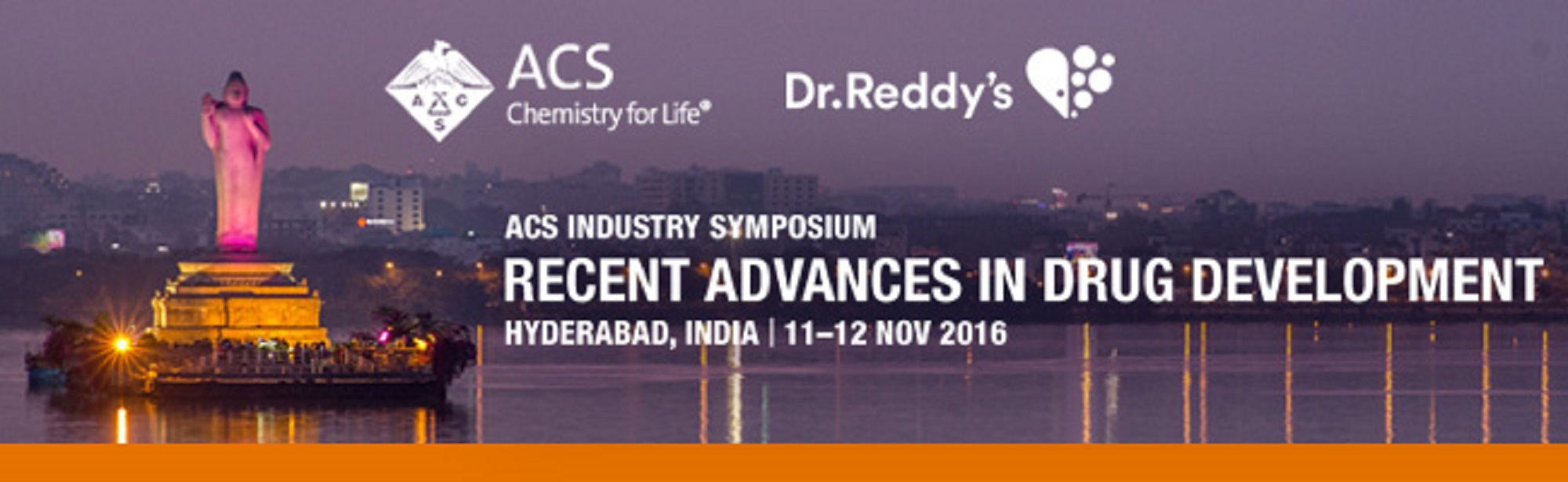
Register Today for the ACS Symposium in India on Recent Advances in Drug Development, 11-12 November 2016 in Hyderabad, India
Inaugural ACS Industry Symposium, 11-12 November 2016 in Hyderabad, India
Recent Advances in Drug Development
Register Today for the ACS Symposium in India on Recent Advances in Drug Development
To view this email as a web page, go here.
Register now for the inaugural ACS Industry Symposium, 11-12 November 2016 in Hyderabad, India. Be sure to secure your seat today as rates will increase on 27 October!
http://acssymposium.org.in/
The theme of the Symposium is Recent Advances in Drug Development. The event will feature lectures by the world's leading researchers and experts in the pharma industry, including:
- Dr. Peter Senter of Seattle Genetics
- Dr. Jagath Reddy Junutula of Cellerant Therapeutics, Inc.
- Dr. Ming-Wei Wang of the Shanghai Institute of Materia Medica, Chinese Academy of Sciences
This is an exclusive event being organized in partnership with Dr. Reddy's Laboratories for pharma professionals throughout India. Space is limited so register today!
Please visit our website to learn more about the speakers and the program.
Register today to ensure your access to the ACS Industry Symposium. We look forward to seeing you in Hyderabad in November.
CAS
2540 Olentangy River Rd Columbus, OH 43202 US
/////// ACS Symposium, Recent Advances in Drug Development, 11-12 November 2016, Hyderabad, India, dr reddys, cas
Wednesday, 12 October 2016
Levente Ondi

Levente Ondi
Director of R. & D. at XiMo Hungary Ltd.
https://hu.linkedin.com/in/levente-ondi-2005931a
levente.ondi@ximo-inc.com
Experience
Education
Budapesti Mûszaki és Gazdaságtudományi Egyetem / Technical University of Budapest
Master of Science (M.Sc.), Chemical Engineering
Molybdenum- and tungsten-based olefin metathesis catalysts have demonstrated excellent results in the control of cis (Z-) selectivity as well as enantioselectivity. However, their air and moisture sensitivity, which requires the use of a glovebox, has prevented their more widespread use by organic chemists. Now we report on developed, preweighed Mo catalysts formulated in paraffin tablets.
The significantly improved air stability, high homogeneity, and uniformity of the pellets allow researchers to carry out reactions on the bench avoiding the need of a glovebox.
The two different Mo-based complexes which were packed into tablets are XiMoPac-Mo001 (1) that can be used to achieve endo-selective enyne ring-closing metathesis (RCM) reactions, interalia; and XiMoPac-Mo003 (2) which was reported among the best catalysts to promote Z-selective cross-metathesis.
For the evaluation of the wax-protected catalysts commonly used, highly reproducible robust model reactions were chosen: homo cross-metathesis (HCM) of functionalized (e.g., methyl 9-decenoate) and unfunctionalized (allylbenzene) terminal olefins, and ring closing metathesis (RCM) of diethyl diallylmalonate. The yields and conversions were comparable with those which can be achieved in glovebox with nonformulated catalysts.
Exposure to air did not cause any significant reduction in conversion while the product selectivity (targeted product vs homologues derived from double bond isomerization) remained high. In contrast, exposure to air caused a measurable drop in the conversion with the nonprotected catalyst. Furthermore, the formulated catalysts remained unaffected even after 4 h of exposure to air, showing its enhanced air stability.
In conclusion, these commercially available air-stable Mo-catalyst tablets allow the reactions to be accomplished using ordinary Schlenk techniques, and hence simplify catalyst handling in pilot laboratories and plants.
From Box to Bench: Air-Stable Molybdenum Catalyst Tablets for Everyday Use in Olefin Metathesis
† XiMo Hungary Ltd., 7. Zahony Str., Budapest HU-1031, Hungary
‡ XiMo AG, 3. Altsagenstrasse, Horw/Luzern CH-6048, Switzerland
Org. Process Res. Dev., Article ASAP
DOI: 10.1021/acs.oprd.6b00161
Ximo Hungary Kft.
Chemical Plant
Address: Budapest, Záhony utca 7. D épület, 1031 Hungary
Prof. Dr. Georg Fráter
Chief Operating Officer
- Over 30 years experience in the Swiss chemical industry
- Over 20 years in the fragrance and flavor industry, five as Research Director for Givaudan
- Former President Swiss Chemical Society (SCS)
- Former Professor at the University of Zürich
- Current member of the board of Thales Nano
Education: Ph.D. University of Zurich; M.Sc. University of Zurich
//////////
Subscribe to:
Posts (Atom)